
Building a Cybersecurity-First Culture in the Age of AI: A Guide for Australian SMBs
As artificial intelligence becomes increasingly integrated into business operations, Australian small and medium-sized businesses (SMBs) face an unprecedented challenge: balancing the transformative power of AI with the growing sophistication of cyber threats. The rapid adoption of AI technologies has fundamentally changed the cybersecurity field, creating new vulnerabilities while simultaneously offering powerful defensive capabilities.
Recent data from the Australian Cyber Security Centre (ACSC) shows that cybercrime reports increased by 13% in 2023, with SMBs representing 43% of all targeted attacks. Meanwhile, AI adoption among Australian businesses has surged 67% year-over-year, creating a perfect storm of opportunity and risk.
The solution isn’t to avoid AI adoption – it’s to build a cybersecurity-first culture that treats security as a fundamental business enabler rather than an afterthought. This approach ensures that as your business harnesses AI’s potential, it does so with robust defenses that protect your data, customers, and competitive advantage.
At CloudGeeks, we help Australian businesses build secure AI implementations that protect against evolving threats. Our cloud security expertise ensures that your AI adoption journey includes robust cybersecurity foundations from day one.
The AI-Cybersecurity Paradox: Opportunity and Risk
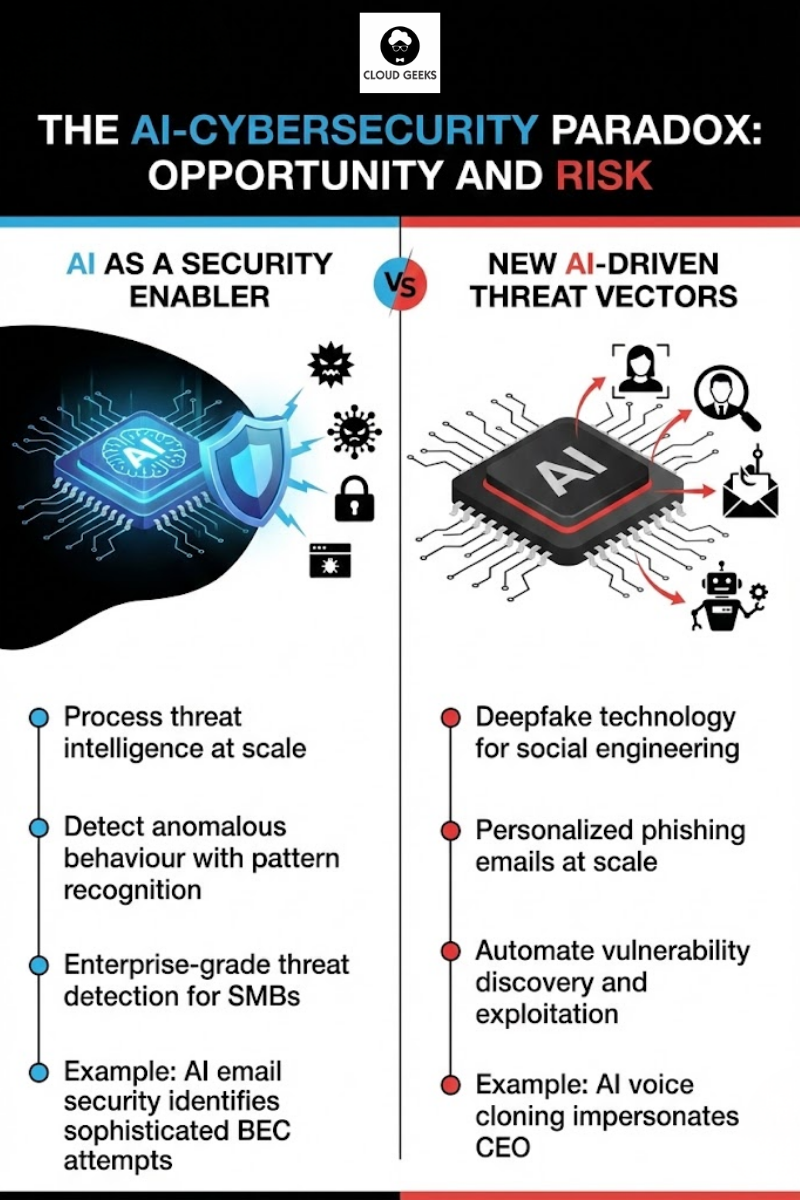
AI presents a fascinating paradox in cybersecurity: it’s simultaneously one of our most powerful defensive tools and a significant source of new vulnerabilities. Understanding this dual nature is crucial for building an effective security culture.
AI as a Security Enabler
AI-powered security tools can process threat intelligence at scales impossible for human analysts. Machine learning algorithms excel at pattern recognition, making them particularly effective at detecting anomalous behaviour that might indicate a breach. For Australian SMBs, this means access to enterprise-grade threat detection that was previously cost-prohibitive.
Consider a Melbourne-based accounting firm that implemented AI-powered email security. The system learned normal communication patterns and successfully identified a sophisticated business email compromise attempt that traditional filters missed. The AI detected subtle linguistic anomalies in an email appearing to come from the managing partner, preventing a $180,000 fraudulent transfer.
New AI-Driven Threat Vectors
However, cybercriminals are equally enthusiastic AI adopters. Deepfake technology can now create convincing audio and video content for social engineering attacks. AI-powered tools can generate highly personalized phishing emails at scale, making them harder to detect. Perhaps most concerning, AI can automate vulnerability discovery and exploitation, accelerating attack timelines.
A Sydney-based manufacturing company recently faced an attack where criminals used AI voice cloning to impersonate the CEO in a phone call to the finance team. Only their cybersecurity-first culture – specifically, a verification protocol for all financial requests – prevented a significant loss.
Foundations of a Cybersecurity-First Culture
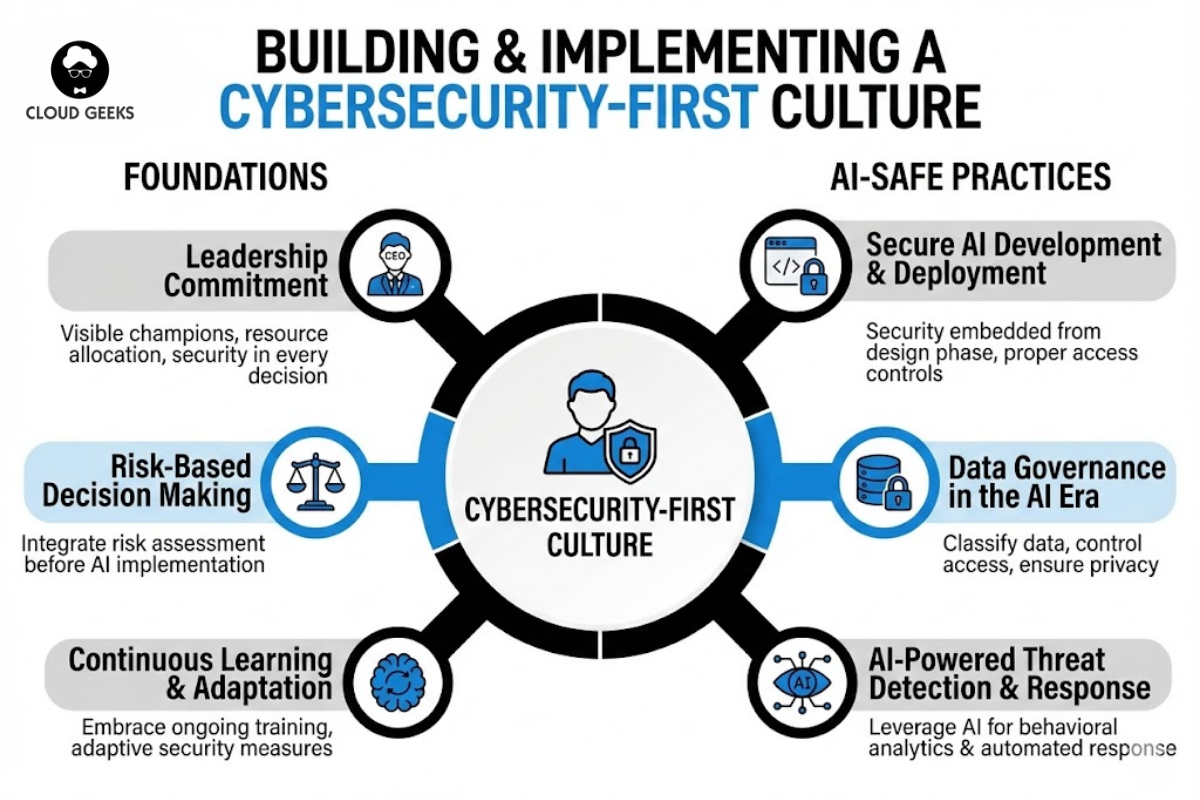
Building a cybersecurity-first culture requires more than installing security software; it demands a fundamental shift in how your organization thinks about and approaches digital risk.
Leadership Commitment and Visibility
Cybersecurity culture starts at the top. When leadership consistently demonstrates that security is a priority through actions, resource allocation, and communication, it sets the tone for the entire organization. This means CEOs and senior managers must be visible champions of security practices.
Successful Australian SMBs often designate a ‘Security Champion’ role, even in smaller teams. This person doesn’t need to be a technical expert but serves as a focal point for security awareness and ensures security considerations are part of every business decision.
Risk-Based Decision Making
A cybersecurity-first culture integrates risk assessment into all technology decisions. Before implementing any AI solution, teams should ask: What data will this access? What new attack surfaces does this create? How will we monitor for misuse?
This approach helped a Brisbane logistics company avoid a significant security incident when evaluating AI-powered route optimization software. Their risk assessment revealed the solution required excessive access to customer data, leading them to choose a more secure alternative that met their needs without compromising security.
Continuous Learning and Adaptation
The threat field evolves constantly, especially with AI acceleration. A cybersecurity-first culture embraces continuous learning, regular training updates, and adaptive security measures. This includes staying informed about AI-specific threats and defensive techniques.
Implementing AI-Safe Security Practices
As your organization adopts AI technologies, specific security practices become critical for maintaining a strong security posture.
Secure AI Development and Deployment
When developing or deploying AI solutions, security must be embedded from the design phase. This includes implementing proper access controls for AI training data, ensuring model integrity, and establishing monitoring for unusual AI behaviour.
For SMBs leveraging cloud-based AI services, this means carefully reviewing service provider security certifications, understanding data residency requirements (particularly important for Australian businesses subject to privacy legislation), and implementing proper API security measures.
Data Governance in the AI Era
AI systems are only as good as their training data, making data governance crucial. This includes classifying data based on sensitivity, implementing proper access controls, and ensuring AI systems can’t inadvertently expose sensitive information.
A Perth-based healthcare provider implemented an AI-powered patient scheduling system but first established strict data governance protocols. They created synthetic training data that maintained statistical properties while removing personally identifiable information, demonstrating how proper governance enables AI adoption without compromising security.
Similarly, businesses using AI for content creation need to consider data governance. ContentSage, our AI-powered SEO writing platform, is designed with security-first principles, ensuring that your business data and content strategies remain protected while leveraging AI capabilities.
AI-Powered Threat Detection and Response
Leverage AI’s defensive capabilities by implementing AI-powered security tools appropriate for your business size and complexity. These might include:
- Behavioral Analytics: AI systems that learn normal user behavior and flag anomalies
- Automated Threat Intelligence: Tools that correlate threat data from multiple sources
- Intelligent Incident Response: Systems that can automatically contain threats while alerting human responders
The key is choosing solutions that integrate well with your existing infrastructure and don’t create additional complexity that could introduce new vulnerabilities.
Training and Awareness in an AI-Driven World
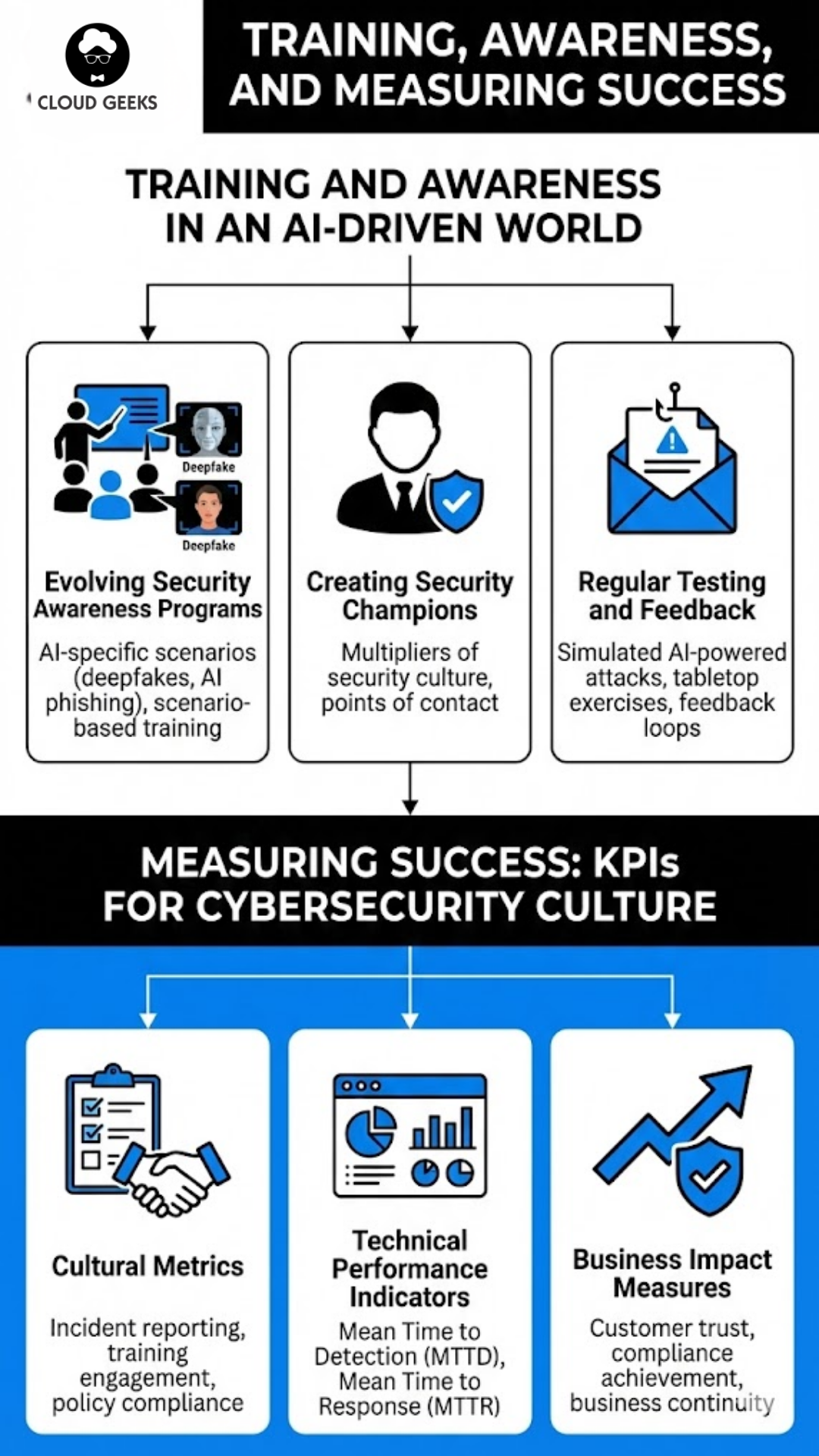
Traditional security awareness training needs updating for the AI era. Your team must understand both how to use AI tools safely and how to recognize AI-powered attacks.
Evolving Security Awareness Programs
Modern security training should cover AI-specific scenarios. This includes recognizing deepfake audio or video, understanding how AI can create highly convincing phishing emails, and knowing when to verify requests through alternative channels.
Effective programs use practical, scenario-based training rather than generic presentations. For example, showing employees actual examples of AI-generated phishing emails helps them recognize the subtle signs that distinguish these from legitimate communications.
Creating Security Champions
Identify and train security champions throughout your organization. These individuals become multipliers of security culture, helping embed security thinking into daily workflows and serving as points of contact for security questions or concerns.
Security champions don’t need deep technical expertise but should understand your industry’s threat field and be comfortable discussing security considerations with their colleagues.
Regular Testing and Feedback
Implement regular security testing that includes AI-aware scenarios. This might involve simulated phishing campaigns that use AI-generated content or tabletop exercises that explore how teams would respond to AI-powered attacks.
The goal isn’t to catch people making mistakes but to identify training opportunities and reinforce the importance of verification procedures and security protocols.
Measuring Success: KPIs for Cybersecurity Culture
A cybersecurity-first culture requires measurable outcomes to ensure effectiveness and continuous improvement.
Cultural Metrics
Traditional security metrics focus on technical measures, but cultural metrics examine behaviors and attitudes. These might include:
- Security Incident Reporting Rates: Higher reporting often indicates greater security awareness, not worse security
- Training Engagement: Participation rates and feedback on security training programs
- Security Question Frequency: How often employees ask security-related questions or seek guidance
- Policy Compliance: Adherence to security policies and procedures in day-to-day operations
Technical Performance Indicators
Combine cultural metrics with technical measures to get a complete picture:
- Mean Time to Detection (MTTD): How quickly security incidents are identified
- Mean Time to Response (MTTR): How quickly your team responds to identified threats
- Vulnerability Remediation Time: How quickly identified vulnerabilities are addressed
- AI System Performance: Specific metrics for AI-powered security tools, including false positive rates and threat detection accuracy
Business Impact Measures
Ultimately, cybersecurity culture should support business objectives:
- Customer Trust Metrics: Customer feedback and retention rates
- Compliance Achievement: Meeting regulatory requirements and industry standards
- Business Continuity: Minimizing disruption from security incidents
- Innovation Enablement: How security practices support rather than hinder business innovation
Building Your Cybersecurity-First Future
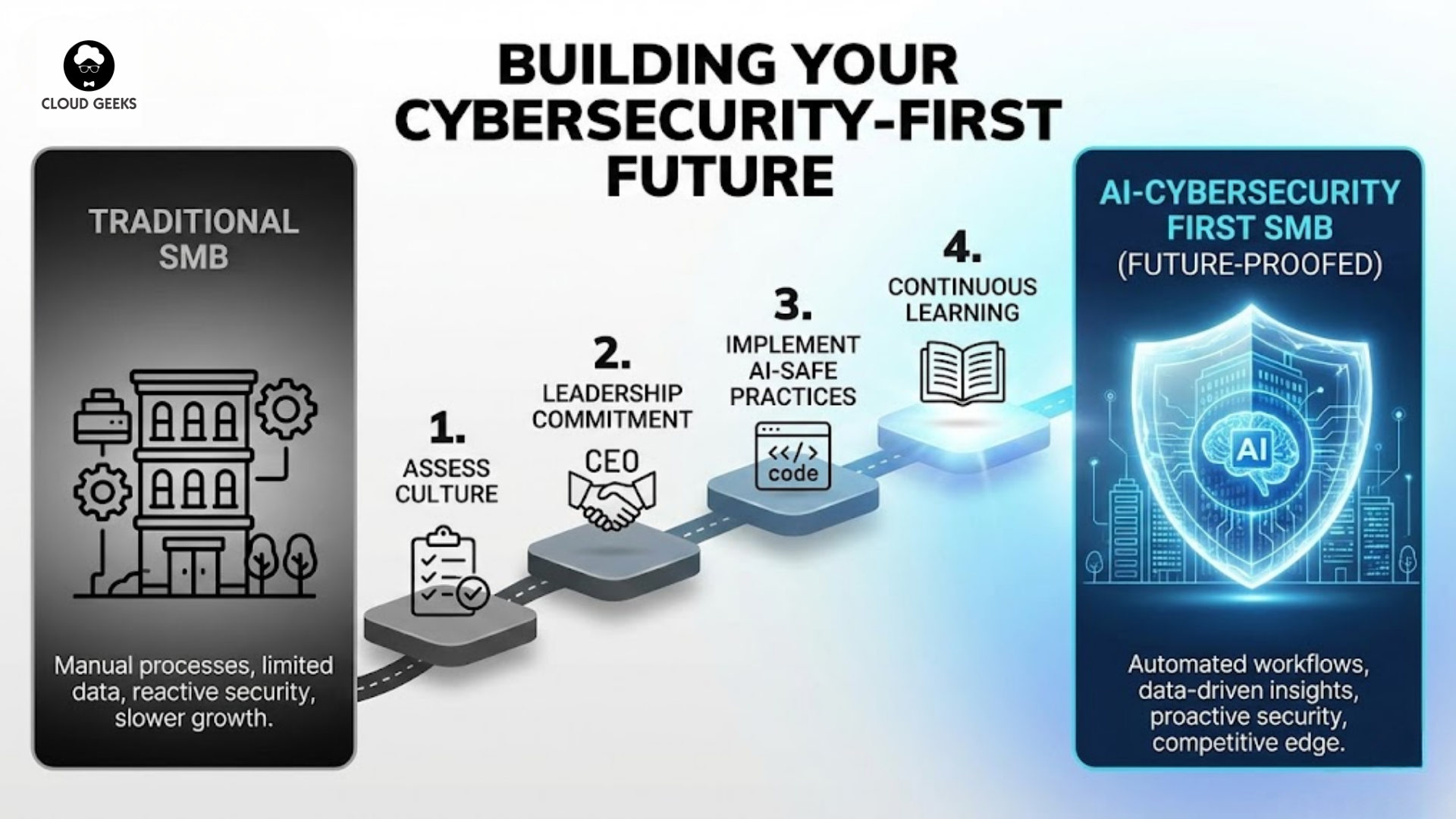
Creating a cybersecurity-first culture in the age of AI isn’t about perfection – it’s about building resilience, awareness, and adaptive capacity. Australian SMBs that embrace this approach position themselves to harness AI’s transformative potential while maintaining the trust of customers, partners, and stakeholders.
The journey begins with recognizing that cybersecurity isn’t a technology problem requiring only technology solutions. It’s a business challenge that requires alignment between people, processes, and technology. In the AI era, this alignment becomes even more critical as the pace of change accelerates and the stakes continue to rise.
Start by assessing your current culture honestly. Are security considerations part of every technology decision? Do your team members feel comfortable reporting potential security issues? Are you prepared for AI-powered attacks while leveraging AI-powered defenses?
The organizations that thrive in the AI-powered future will be those that build security into their DNA – making it a natural, integrated part of how they operate rather than an external constraint. For Australian SMBs, this cultural transformation isn’t just about protection; it’s about creating sustainable competitive advantages in an increasingly digital marketplace.
Key Takeaways:
- Embrace the Paradox: Use AI’s defensive capabilities while protecting against AI-powered threats
- Start with Leadership: Cybersecurity culture requires visible commitment from the top
- Integrate, Don’t Isolate: Make security considerations part of every business decision
- Invest in People: Technology alone cannot create a security-first culture
- Measure and Adapt: Use both cultural and technical metrics to guide continuous improvement
- Think Long-term: Building culture is a journey, not a destination
The age of AI presents unprecedented opportunities for Australian businesses. By building a cybersecurity-first culture, you ensure your organization can seize these opportunities safely, sustainably, and successfully.
Ready to build a cybersecurity-first AI strategy for your business? Contact the CloudGeeks team to discuss how we can help you implement AI solutions with robust security measures that protect your business while enabling innovation.
Related Articles
- Managing Vendor Risk: Is Your AI Supply Chain Secure?
- Data Sovereignty 101: Keeping Your AI Australian
- Rate Limiting Strategies to Protect Your Australian Business APIs
- The Human-in-the-Loop: A Governance Framework for Aussie SMBs
- AI for Australian Healthcare Practices: Scheduling, Privacy, and Patient Care
Mobile apps thrive on solid cloud foundations. Awesome Apps can build a companion app that leverages your existing cloud setup.
Cloud Geeks is the IT infrastructure division of Ganda Tech Services, providing managed cloud and cybersecurity solutions to Australian businesses.