
AI in Healthcare Administration: How Australian Medical Practices Can Streamline Operations and Cut Costs
Australian medical practices are facing serious challenges. Rising operational costs, staff shortages, increasing patient volumes, and complex administrative requirements are putting heavy pressure on healthcare providers across the country. According to the Australian Medical Association, administrative tasks now consume up to 40% of a healthcare professional’s time – time that could be better spent on patient care.
This is where artificial intelligence (AI) comes in. In 2024, we’re witnessing a transformation in healthcare AI with the emergence of advanced language models like GPT-4 and Claude, along with managed AI services like AWS Bedrock. From automated appointment scheduling to smart billing systems powered by AI agents, these technologies are helping medical practices simplify operations, reduce costs, and provide better patient outcomes.
In this guide, we’ll explore how Australian medical practices can use modern AI solutions—including GPT-4, Claude API, and AWS Bedrock—to improve their administrative operations and stay competitive in today’s rapidly evolving digital healthcare sector.
At CloudGeeks, our healthcare industry expertise helps medical practices implement AI solutions that simplify operations while maintaining compliance with Australian healthcare regulations and data protection requirements.
Understanding AI’s Role in Healthcare Administration
Artificial intelligence in healthcare administration covers a broad range of technologies designed to automate and improve various administrative processes. Unlike the clinical AI applications we often hear about in the news, administrative AI focuses on the business side of healthcare delivery.
At its core, AI in healthcare administration uses machine learning algorithms, natural language processing, and robotic process automation to handle routine tasks that traditionally require significant human input. These technologies can process large amounts of data, identify patterns, and make smart decisions with minimal human oversight.
For Australian medical practices, this represents a real opportunity. The typical GP practice handles thousands of patient interactions monthly, manages complex billing requirements across Medicare and private insurance systems, and must maintain detailed records for compliance purposes. AI can turn these time-consuming processes into efficient, automated workflows.
The benefits go beyond simple efficiency gains. AI-powered systems can operate 24/7, reduce human error rates, and provide consistent service quality. They can also scale easily as practices grow, making them particularly valuable for expanding medical groups and multi-location practices.
Transforming Patient Scheduling and Management
One of the most immediate applications of AI in healthcare administration is smart patient scheduling and management. Traditional appointment booking systems rely heavily on manual coordination, often leading to scheduling conflicts, no-shows, and poor resource use.
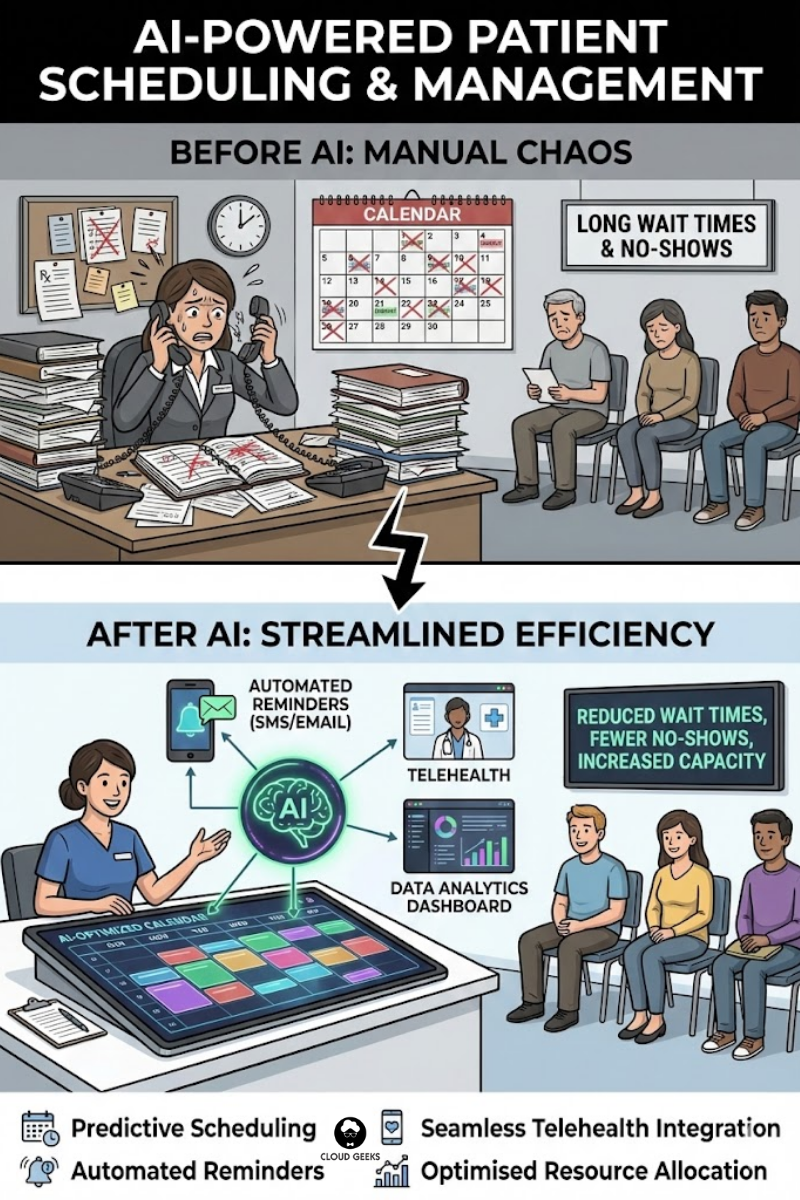
AI-powered scheduling systems use predictive analytics to improve appointment slots based on historical data, patient behaviour patterns, and provider availability. These systems can automatically identify the best appointment times for different types of consultations, factor in travel times for home visits, and even predict which patients are most likely to reschedule or miss appointments.
For example, the Royal Melbourne Hospital implemented an AI scheduling system that reduced appointment wait times by 23% and decreased no-show rates by 15%. The system analyses patient demographics, medical history, and previous appointment patterns to suggest better scheduling slots.
Automated patient communication is another major improvement in 2024. Advanced AI chatbots powered by GPT-4 and Claude can handle routine inquiries with near-human conversational ability, send appointment reminders via SMS or email, and even conduct basic pre-appointment screenings. These systems can operate in multiple languages – particularly valuable in Australia’s diverse healthcare sector – and provide instant, contextually-aware responses to common patient questions. With AWS Bedrock, medical practices can deploy these AI agents securely while maintaining HIPAA and Privacy Act compliance.
Modern AI scheduling platforms also integrate easily with telehealth services, automatically determining whether a consultation can be conducted remotely based on the patient’s condition and history. This capability proved essential during the COVID-19 pandemic and continues to provide flexibility for both patients and providers.
The financial impact is real. Medical Economics Australia reports that practices using AI scheduling systems see an average 18% increase in daily appointments and a 31% reduction in administrative overhead related to appointment management.
Improving Medical Billing and Claims Processing
Medical billing and claims processing are some of the most complex and error-prone aspects of healthcare administration. Australian medical practices must deal with Medicare requirements, private health insurance protocols, and various government rebate schemes – all while ensuring accurate coding and timely claim submissions.
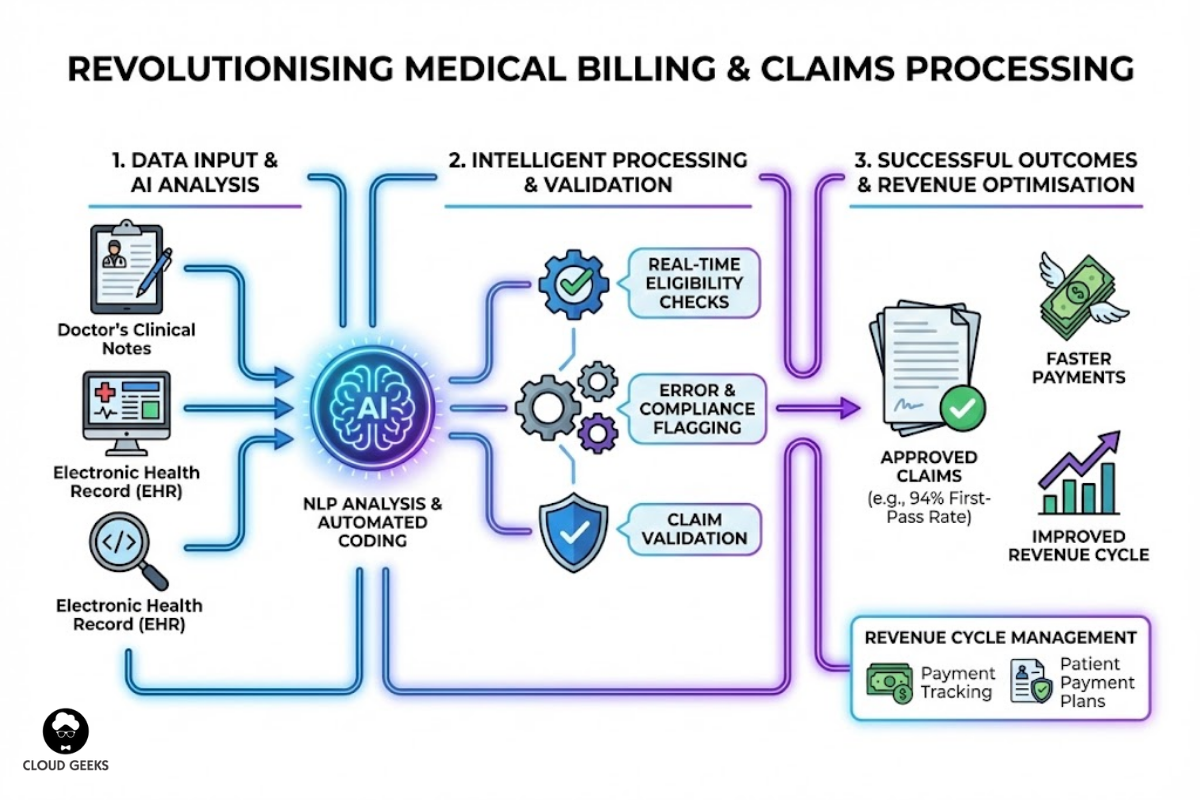
AI-powered billing systems are changing this area by automating much of the claims process. These systems use natural language processing to analyse clinical notes and automatically generate appropriate billing codes, cutting the time required for manual coding and reducing errors.
Smart claims processing systems can also identify potential issues before submission. They cross-reference patient eligibility, verify procedure codes, and flag potential compliance issues, sharply reducing claim rejection rates. Some advanced systems even predict which claims are likely to be disputed and provide recommendations for supporting documentation.
A good example is the implementation at Healius, one of Australia’s largest pathology and imaging networks. Their AI billing system processes over 50,000 claims daily with a 94% first-pass acceptance rate, compared to the industry average of 68%. The system has reduced billing-related administrative costs by approximately 35% while improving cash flow through faster claim resolution.
Revenue cycle management is another area where AI works well. These systems can track payments, identify overdue accounts, and even prioritise collection efforts based on likelihood of payment. They can generate personalised payment reminders and identify patients who might benefit from payment plan options.
For smaller practices, cloud-based AI billing solutions offer enterprise-level capabilities without the need for large upfront investment. These systems typically operate on a subscription model and can be implemented quickly with minimal disruption to existing workflows.
Improving Electronic Health Records and Documentation
Electronic Health Records (EHRs) are the backbone of modern medical practice, but they can also be time-consuming to maintain. Studies show that Australian GPs spend an average of 2.3 hours daily on documentation tasks, representing a significant portion of their working day.
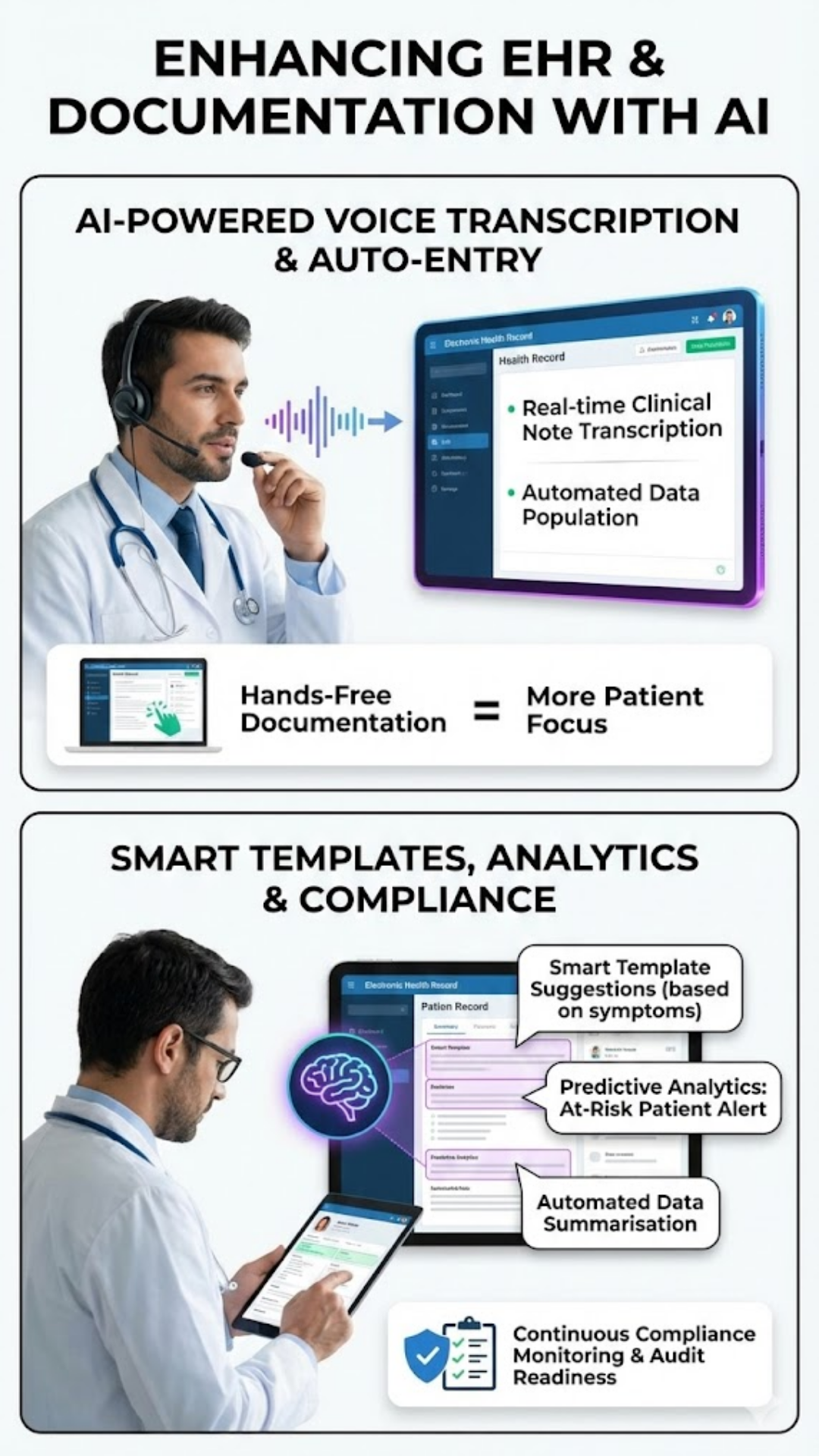
AI is changing EHR management through smart documentation assistance and automated data entry. In 2024, voice recognition systems powered by advanced language models like GPT-4 can transcribe clinical notes in real-time with exceptional accuracy, allowing practitioners to focus on patient interaction rather than typing. These systems are trained to understand medical terminology and can accurately capture complex clinical information. Using AWS Bedrock or Claude API, practices can implement these capabilities while ensuring data remains within Australian jurisdiction.
Smart templates and auto-completion features use machine learning to suggest relevant information based on patient history and presenting symptoms. For instance, if a patient presents with chest pain, the AI system might automatically populate relevant questions about cardiac history, current medications, and associated symptoms.
Data extraction and summarisation are another useful application. AI systems can analyse lengthy patient records and generate concise summaries highlighting key information relevant to current care. This capability is particularly valuable when patients transfer between providers or require emergency care.
Predictive analytics within EHR systems can also identify patients at risk for certain conditions or those who might benefit from preventive interventions. For example, AI algorithms can analyse patient data to identify individuals at high risk for diabetes or cardiovascular disease, enabling early care management.
The Alfred Hospital in Melbourne has implemented an AI-powered EHR system that automatically flags potential drug interactions and suggests alternative medications. The system has reduced medication errors by 28% and decreased the time physicians spend on prescription management by 22%.
Compliance and audit preparation are also simplified through AI. These systems can continuously monitor records for completeness, identify missing documentation, and ensure adherence to regulatory requirements. This early-warning approach reduces the stress and workload associated with compliance audits.
Similar to how ContentSage helps businesses maintain consistent content quality and documentation, AI-powered EHR systems ensure healthcare documentation remains complete, accurate, and compliant with regulatory standards.
Improving Resource Management and Operational Efficiency
Efficient resource management is key for medical practice success, and AI provides useful tools for improving everything from staff scheduling to inventory management. These systems analyse historical data, seasonal patterns, and real-time information to make smart resource allocation decisions.
Staff scheduling AI considers multiple variables including employee skills, patient demand patterns, and regulatory requirements to create better schedules. These systems can predict busy periods, account for staff preferences, and even factor in local events that might impact patient volume. The result is improved staff satisfaction and better patient service levels.
Inventory management systems use predictive analytics to improve medical supply ordering. They track usage patterns, consider lead times, and factor in seasonal variations to maintain good stock levels while reducing waste. Some systems can even automatically generate purchase orders when supplies reach predetermined thresholds.
Patient flow improvement is another key application. AI systems can analyse real-time data from various sources – appointment schedules, current wait times, procedure durations – to identify bottlenecks and suggest workflow improvements. This leads to reduced waiting times and improved patient satisfaction.
Financial forecasting and budgeting benefit greatly from AI analysis. These systems can predict revenue patterns, identify cost-saving opportunities, and provide detailed financial projections based on various scenarios. This capability is particularly valuable for practices planning expansion or major equipment purchases.
Quality assurance and performance monitoring round out AI’s resource management capabilities. These systems continuously analyse key performance indicators, identify trends, and alert management to potential issues before they become serious problems.
Implementation Strategies and Getting Started
Successfully implementing AI in healthcare administration requires careful planning and a practical approach. Australian medical practices should begin by assessing their current processes to identify areas where AI can provide the greatest impact.
Start with pilot projects focusing on high-volume, routine tasks. Appointment scheduling and basic patient communication are excellent starting points, as they offer clear metrics for measuring success and typically require minimal integration with existing systems.
Choose cloud-based solutions when possible, as they offer several advantages for Australian practices. Cloud systems require minimal upfront investment, provide automatic updates, and offer scalability as practices grow. They also ensure compliance with Australian data protection requirements when properly configured.
Staff training and change management are important success factors. Involve your team in the selection process and provide thorough training on new systems. Emphasise how AI will support their roles rather than replace them – automation handles routine tasks, freeing staff to focus on more valuable patient interaction and complex problem-solving.
Data security and privacy must be top priorities. Ensure any AI solution complies with Australian Privacy Principles and healthcare-specific regulations. Look for providers with experience in the Australian healthcare market and strong security credentials.
Measure and monitor results from the beginning. Establish baseline metrics before implementation and track improvements over time. Common metrics include appointment booking efficiency, billing accuracy rates, patient satisfaction scores, and staff productivity measures.
Consider partnering with experienced technology providers who understand the unique challenges of Australian healthcare practices. The right partner can provide ongoing support, training, and system tuning to ensure maximum return on investment.
Conclusion: The Future of Healthcare Administration
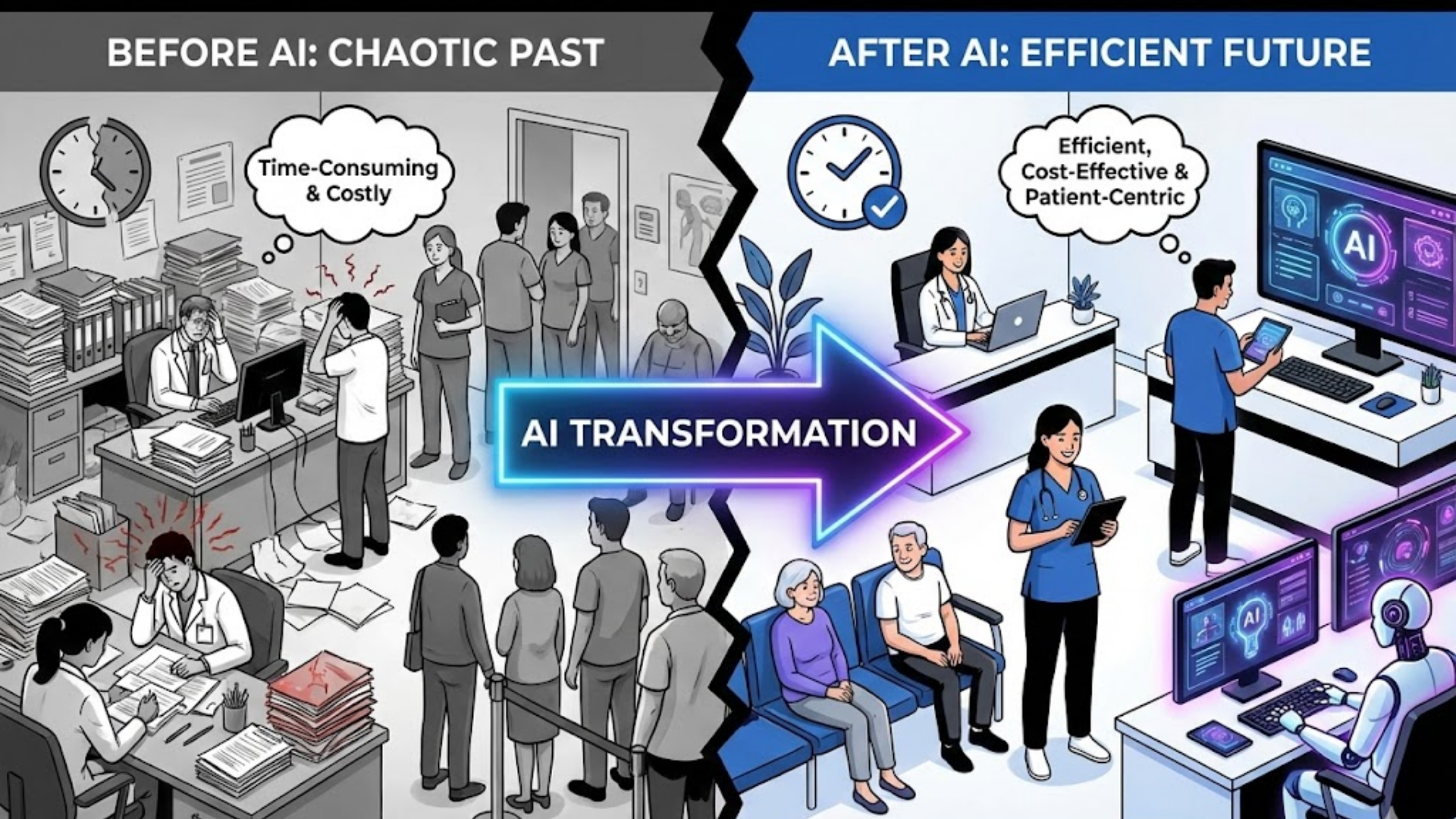
AI in healthcare administration isn’t just a futuristic concept – in 2024, it’s fundamentally changing how medical practices operate across Australia. The emergence of advanced AI agents powered by GPT-4, Claude, and managed services like AWS Bedrock has made sophisticated automation accessible to practices of all sizes. From smart scheduling systems that reduce no-shows to automated billing platforms that improve cash flow, these AI solutions offer real benefits that directly impact practice efficiency and profitability.
The key takeaways for Australian medical practices are clear:
- Start small and scale gradually: Begin with pilot projects in high-impact areas like scheduling or billing
- Choose cloud-based solutions: They offer flexibility, scalability, and lower upfront costs
- Invest in staff training: Successful implementation requires team buy-in and proper training
- Prioritise data security: Ensure compliance with Australian healthcare regulations
- Measure results: Track key metrics to demonstrate ROI and identify improvement opportunities
The practices that adopt AI today will be better positioned to handle future challenges, from increasing patient demands to evolving regulatory requirements. They’ll also provide better patient experiences while reducing the administrative burden on healthcare professionals.
As AI technology continues to evolve throughout 2024 and beyond, the opportunities for healthcare administration will only expand. With proven platforms like GPT-4, Claude API, and AWS Bedrock now available, Australian medical practices have access to enterprise-grade AI capabilities that were science fiction just a few years ago. Now is the time to explore these solutions and begin transforming operations. The investment in AI today—leveraging these cutting-edge but proven technologies—will show results in improved efficiency, reduced costs, and better patient care for years to come.
At CloudGeeks, we’re committed to helping Australian healthcare practices with this technology adoption. Our team of experts understands the unique challenges facing medical practices and can help you identify and implement the right AI solutions for your specific needs. Contact us today to learn how AI can simplify your practice operations and position you for future success.
Related Articles
- AI for Australian Healthcare Practices: Scheduling, Privacy, and Patient Care
- Data Sovereignty 101: Keeping Your AI Australian
- Document Processing for Australian Businesses: Automated Text Extraction
- The Human-in-the-Loop: A Governance Framework for Aussie SMBs
- AI Tools for Australian SMBs: Practical Guide with Real Case Studies
If your business also needs a web portal or customer-facing dashboard, Cosmos Web Tech builds custom web applications tailored to Australian SMBs.
Ashish Ganda is the founder of Ganda Tech Services, a Sydney-based technology consultancy helping Australian businesses grow through cloud, web, and mobile solutions.