
Digital Transformation Roadmap 2024: 7-Step Guide for Australian SMBs
Digital transformation isn’t just a buzzword—it’s become a business imperative for Australian small and medium businesses (SMBs) looking to remain competitive in today’s rapidly evolving marketplace. According to recent research by the Australian Bureau of Statistics, businesses that have embraced digital transformation are 23% more likely to experience revenue growth and 19% more profitable than their traditional counterparts.
Yet, many growing businesses struggle with where to start. At CloudGeeks, we specialize in digital transformation and cloud solutions tailored for Australian SMBs. The field of cloud solutions, AI technologies, and digital tools can feel overwhelming, especially when you’re trying to balance transformation with day-to-day operations.
This comprehensive roadmap will guide you through seven essential steps to successfully navigate your digital transformation journey, with practical insights tailored specifically for Australian businesses.
Step 1: Assess Your Current Digital Maturity
Before embarking on any transformation journey, you need to understand where you currently stand. A digital maturity assessment serves as your starting point and helps identify gaps, opportunities, and priorities.
Before embarking on any transformation journey, you need to understand where you currently stand. A digital maturity assessment serves as your starting point and helps identify gaps, opportunities, and priorities.
Conducting Your Digital Health Check
Start by evaluating these key areas:
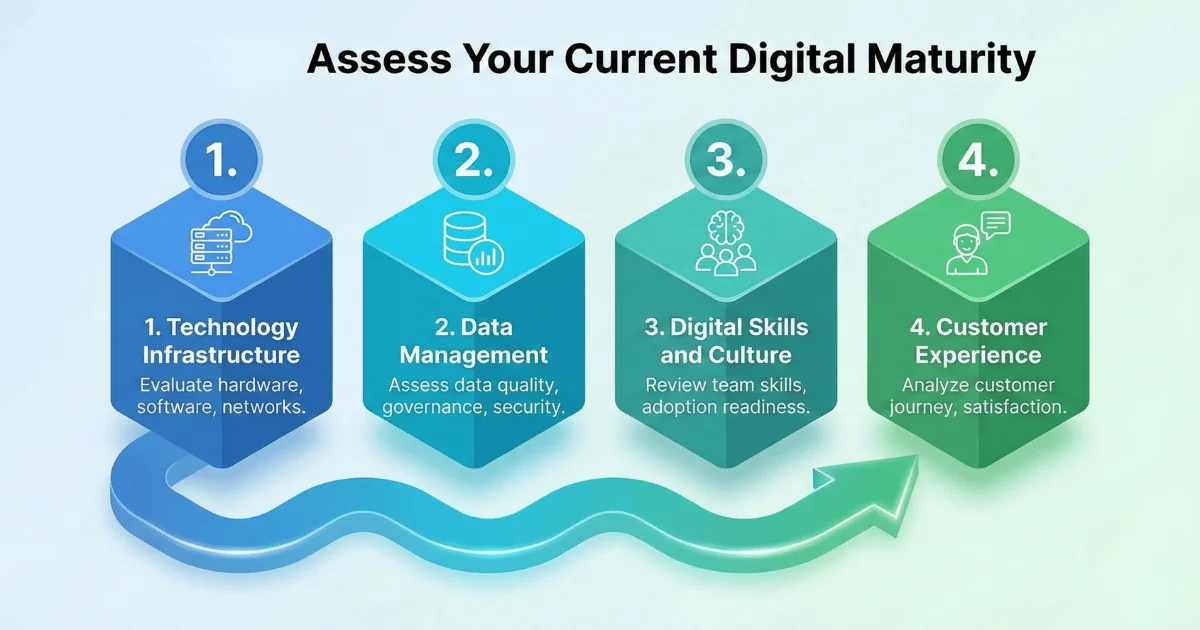
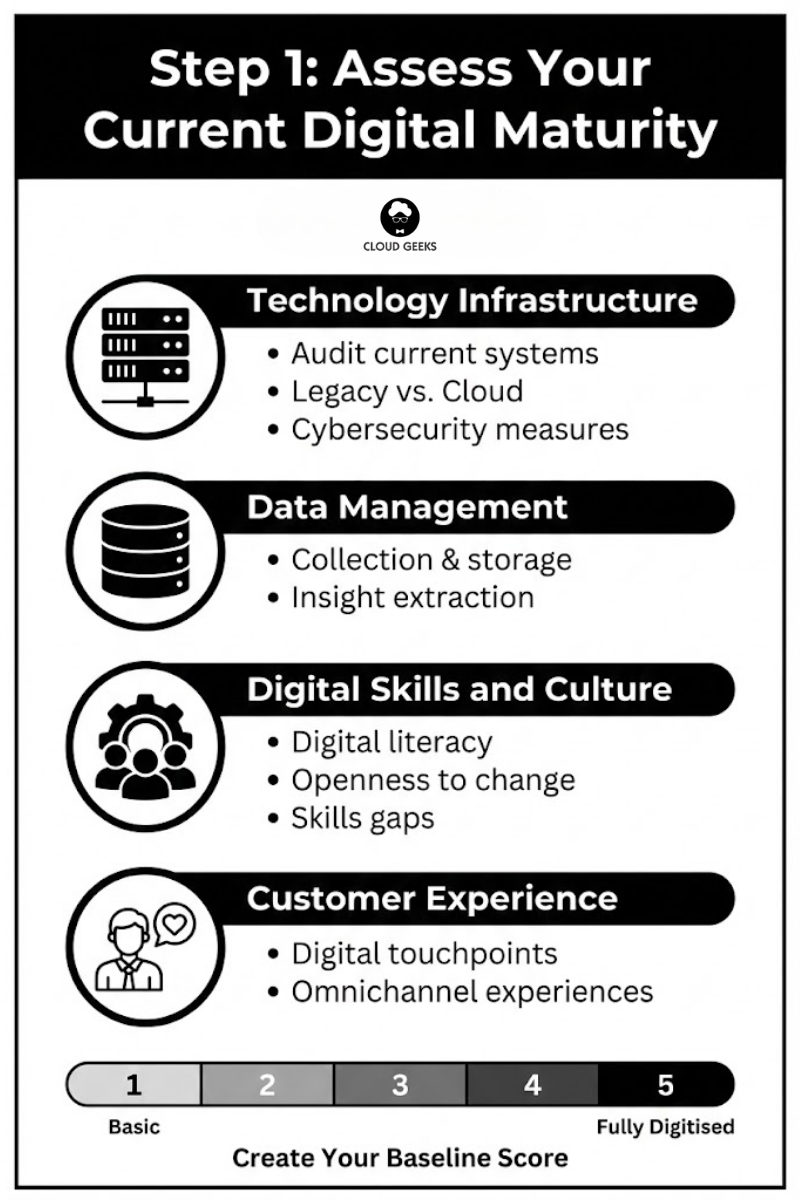
Technology Infrastructure: Audit your current systems, software, and hardware. Are you still relying on legacy systems that limit your agility? Document your current cloud adoption level, cybersecurity measures, and integration capabilities.
Data Management: Assess how your business collects, stores, and utilises data. Many Australian SMBs are sitting on goldmines of customer data but lack the tools to extract actionable insights.
Digital Skills and Culture: Evaluate your team’s digital literacy and openness to change. According to the Australian Industry Group, 67% of businesses cite skills gaps as their primary barrier to digital adoption.
Customer Experience: Review your digital touchpoints from your website and social media presence to your customer service channels. Are you meeting modern customer expectations for seamless, omnichannel experiences?
Creating Your Baseline Score
Rate each area on a scale of 1-5, with 1 being “basic/manual processes” and 5 being “fully digitised and automated.” This baseline will help you track progress and prioritise investments.
Step 2: Define Your Digital Vision and Strategic Goals
Successful digital transformation requires clear direction. Your digital vision should align with your overall business strategy and address specific challenges or opportunities.
Setting SMART Digital Objectives
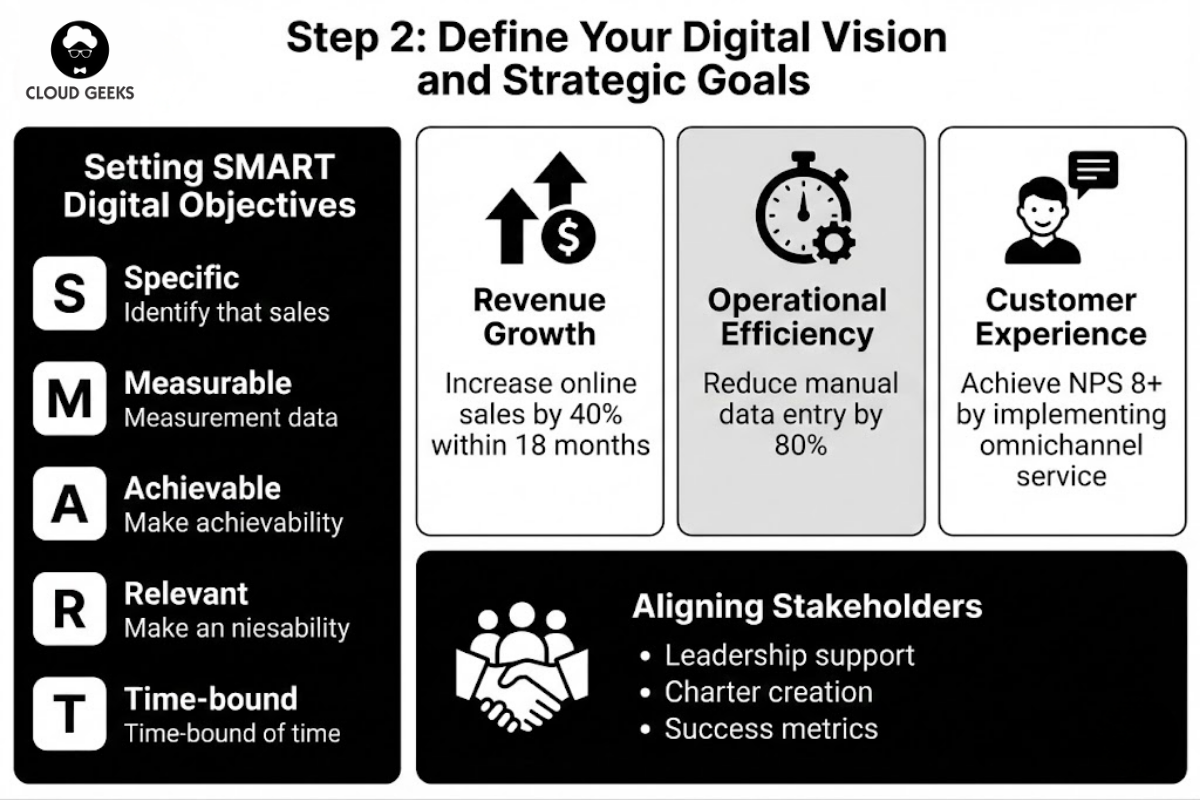
Your digital transformation goals should be Specific, Measurable, Achievable, Relevant, and Time-bound. Here are common objectives for Australian SMBs:
Revenue Growth: “Increase online sales by 40% within 18 months through e-commerce platform implementation and digital marketing automation.”
Operational Efficiency: “Reduce manual data entry by 80% and improve process efficiency by 25% through cloud-based automation tools.”
Customer Experience: “Achieve a Net Promoter Score of 8+ by implementing omnichannel customer service and personalisation technologies.”
Market Expansion: “Enter two new geographic markets within 12 months using digital channels and remote service delivery capabilities.”
Aligning Stakeholders
Ensure leadership, management, and key team members understand and support the vision. Create a digital transformation charter that outlines objectives, success metrics, and resource commitments.
Step 3: Prioritise Quick Wins and Long-term Initiatives
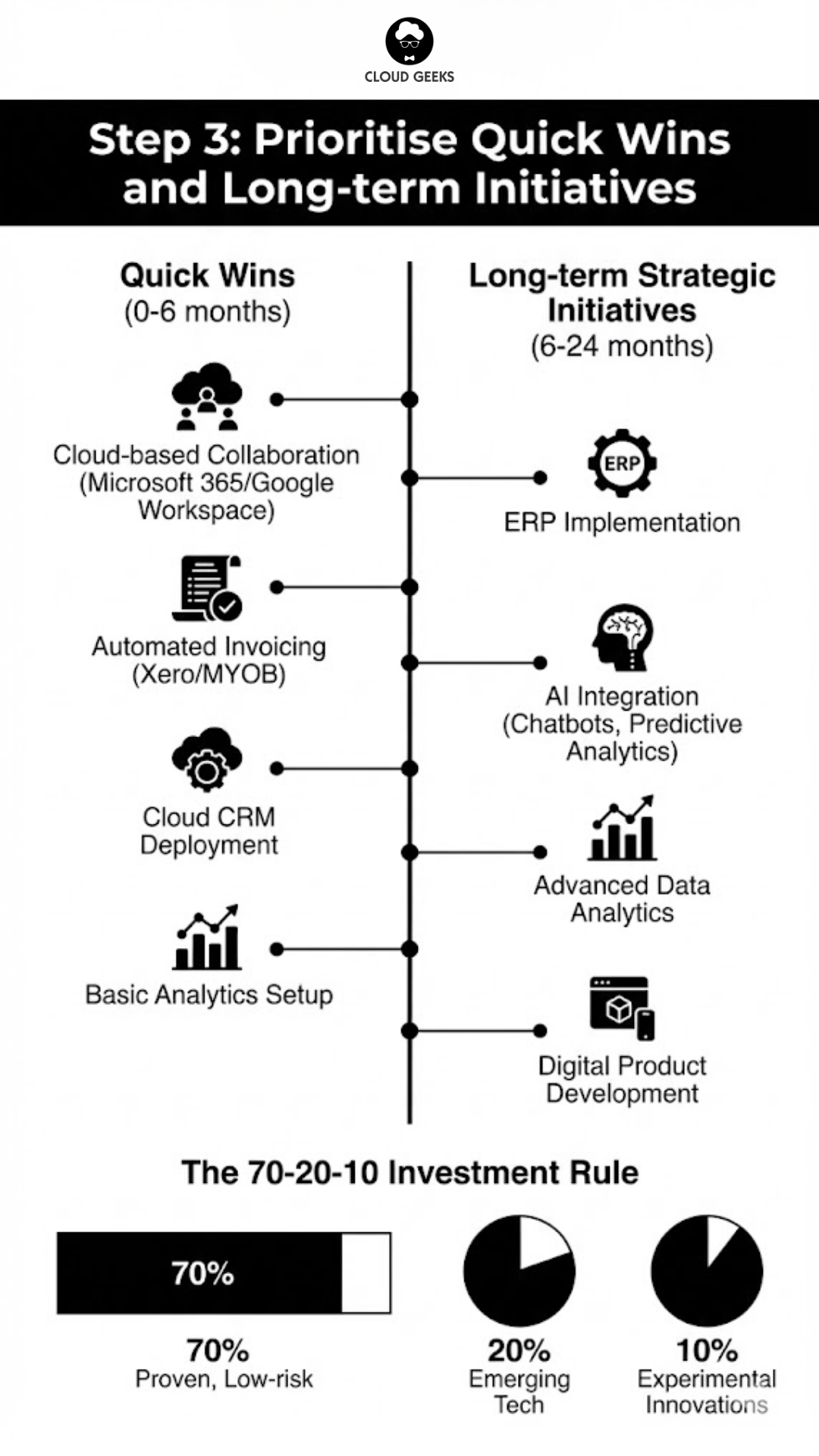
Effective digital transformation balances immediate improvements with strategic, long-term investments. This approach helps maintain momentum while building toward transformative change.
Identifying Quick Wins (0-6 months)
Quick wins demonstrate value early and build confidence in your transformation efforts:
Cloud-based Collaboration Tools: Migrate to platforms like Microsoft 365 or Google Workspace to improve team productivity and remote work capabilities.
Automated Invoicing and Payments: Use solutions like Xero or MYOB to streamline financial processes and improve cash flow.
Customer Relationship Management (CRM): Deploy a cloud-based CRM system to centralise customer data and improve sales processes.
Basic Analytics Implementation: Set up Google Analytics, social media insights, and basic business intelligence dashboards.
Planning Long-term Strategic Initiatives (6-24 months)
Larger initiatives require more planning but deliver transformative results:
Enterprise Resource Planning (ERP) Systems: Integrate operations, finance, and customer management into unified platforms.
Artificial Intelligence Integration: Use AI-powered chatbots, predictive analytics, or automated decision-making systems.
Advanced Data Analytics: Develop comprehensive business intelligence capabilities with predictive modeling and machine learning.
Digital Product Development: Create new revenue streams through digital products or services.
The 70-20-10 Investment Rule
Allocate your digital transformation budget using this proven framework: 70% for proven, low-risk improvements; 20% for emerging technologies with clear business cases; and 10% for experimental, high-potential innovations.
Step 4: Choose the Right Technology Stack
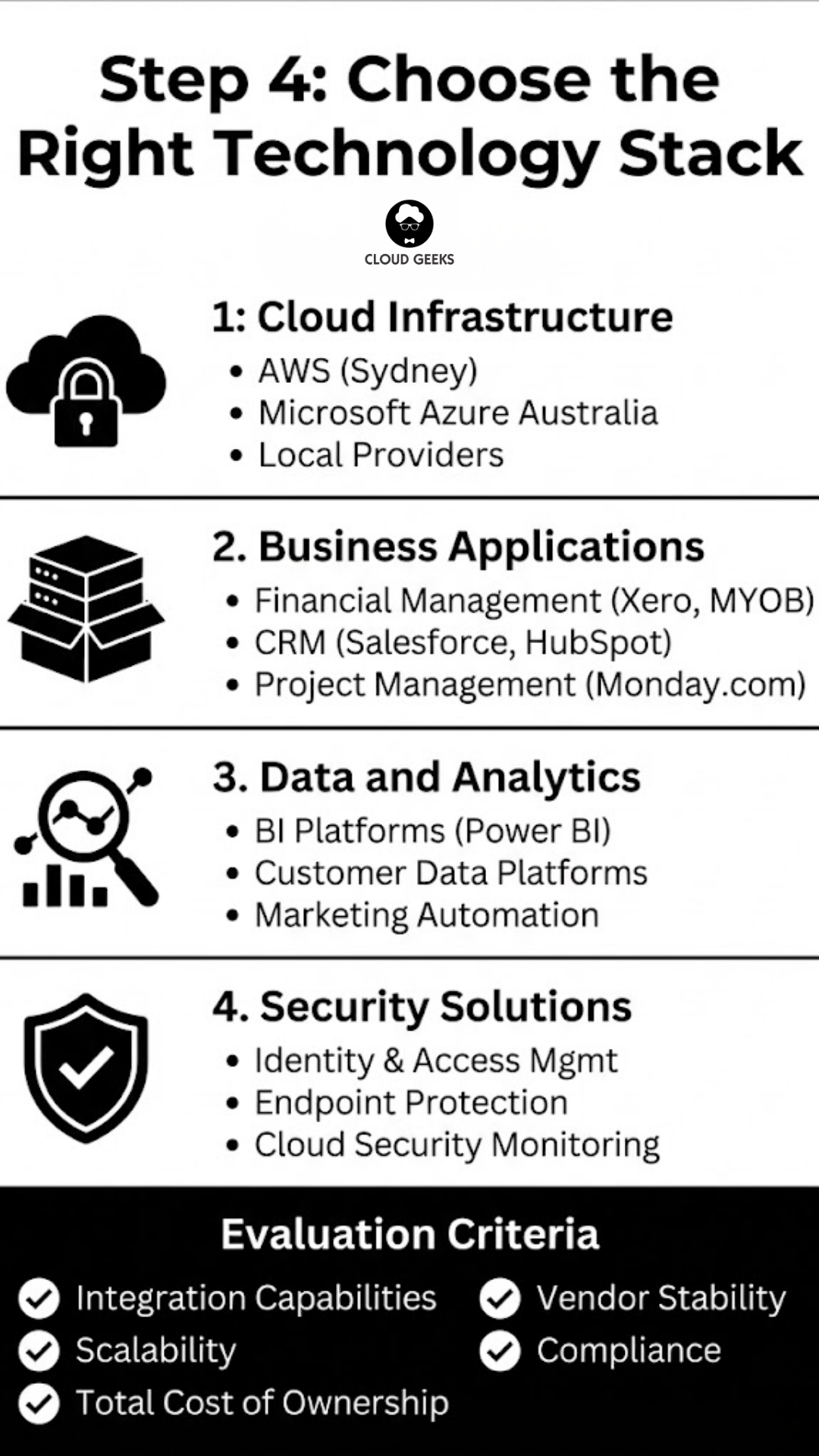
Selecting appropriate technologies is crucial for successful transformation. The key is finding solutions that integrate well, scale with your business, and provide measurable value.
Core Technology Categories
Cloud Infrastructure: Australian businesses increasingly prefer local cloud providers or global providers with Australian data centres for compliance and performance reasons. If you’re evaluating cloud platforms, our Azure vs AWS comparison guide provides detailed insights for Australian businesses. Consider:
- Amazon Web Services (AWS) with Sydney regions
- Microsoft Azure Australia
- Local providers like Macquarie Cloud Services
Business Applications: Choose integrated suites or best-of-breed solutions that connect seamlessly:
- Financial management (Xero, MYOB, NetSuite)
- Customer relationship management (Salesforce, HubSpot, Pipedrive)
- Project management (Monday.com, Asana, Microsoft Project)
- Communication and collaboration (Slack, Microsoft Teams, Zoom)
Data and Analytics: Use tools that grow with your needs:
- Business intelligence platforms (Power BI, Tableau, Looker)
- Customer data platforms (Segment, Adobe Customer Platform)
- Marketing automation (Mailchimp, Pardot, Marketo)
Security Solutions: Protect your digital assets with enterprise-grade security:
- Identity and access management
- Endpoint protection
- Cloud security monitoring
- Compliance management tools
Evaluation Criteria
When selecting technologies, consider:
- Integration capabilities: How well do solutions work together?
- Scalability: Can the solution grow with your business?
- Total cost of ownership: Include implementation, training, and ongoing costs
- Vendor stability: Choose established providers with strong Australian presence
- Compliance: Ensure solutions meet Australian privacy and industry regulations
Step 5: Develop Your Implementation Timeline
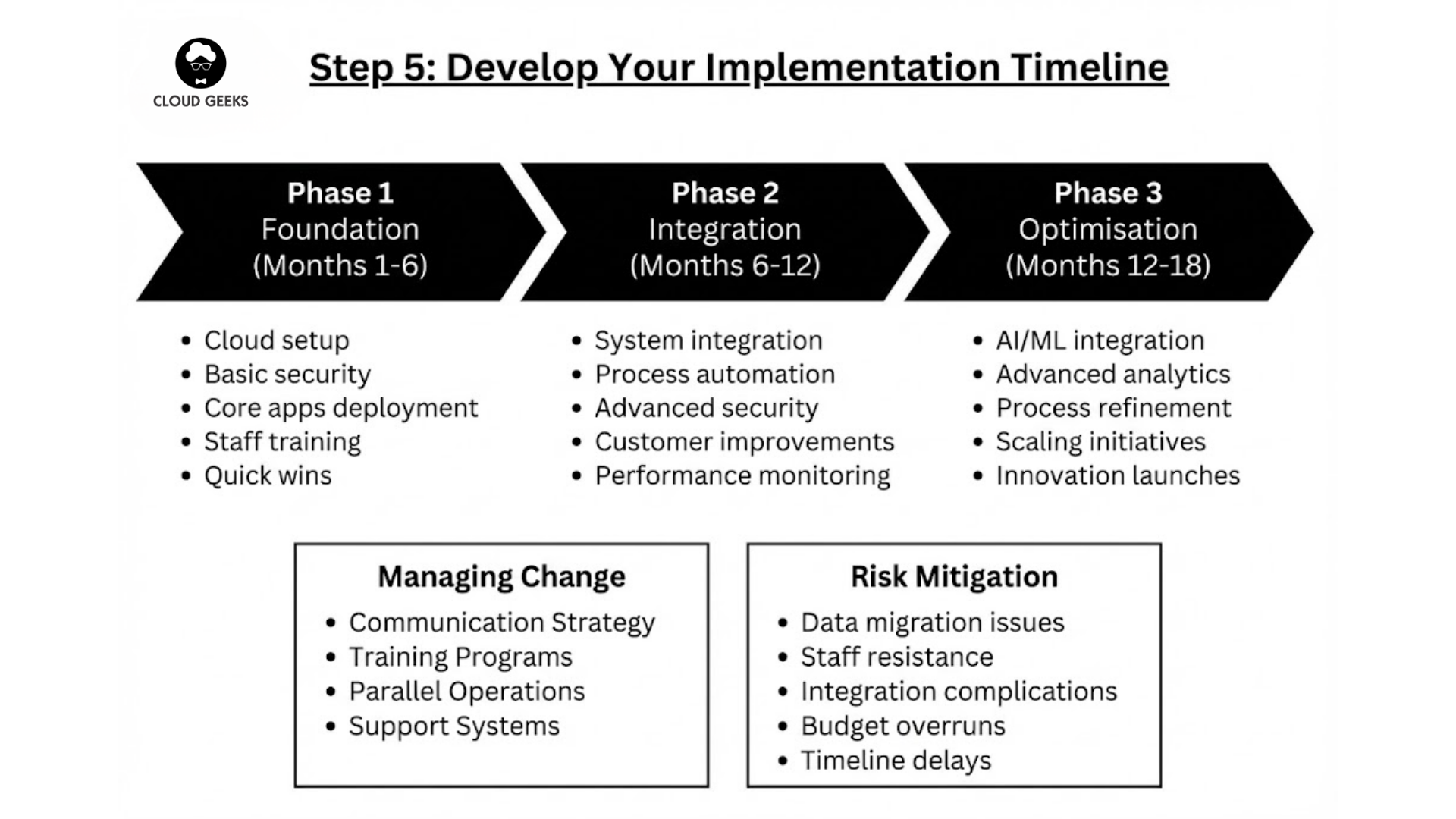
A well-structured timeline keeps your transformation on track while minimising business disruption.
Phase-Based Implementation Approach
Phase 1: Foundation (Months 1-6)
- Cloud infrastructure setup
- Basic security implementation
- Core business applications deployment
- Staff training on new systems
- Quick win initiatives
Phase 2: Integration (Months 6-12)
- System integration and data migration
- Process automation implementation
- Advanced security measures
- Customer-facing digital improvements
- Performance monitoring setup
Phase 3: Optimisation (Months 12-18)
- AI and machine learning integration
- Advanced analytics deployment
- Process refinement based on data insights
- Scaling successful initiatives
- Innovation project launches
Managing Change and Minimising Disruption
Successful implementation requires careful change management:
Communication Strategy: Regular updates to all stakeholders about progress, challenges, and successes
Training Programs: Comprehensive training that accommodates different learning styles and technical skill levels
Parallel Operations: Run new systems alongside existing ones during transition periods
Support Systems: Establish help desks and champion networks to assist team members
Risk Mitigation
Identify and prepare for common implementation challenges:
- Data migration issues
- Staff resistance to change
- Integration complications
- Budget overruns
- Timeline delays
Develop contingency plans and maintain flexibility in your approach.
Step 6: Build Digital Capabilities and Culture
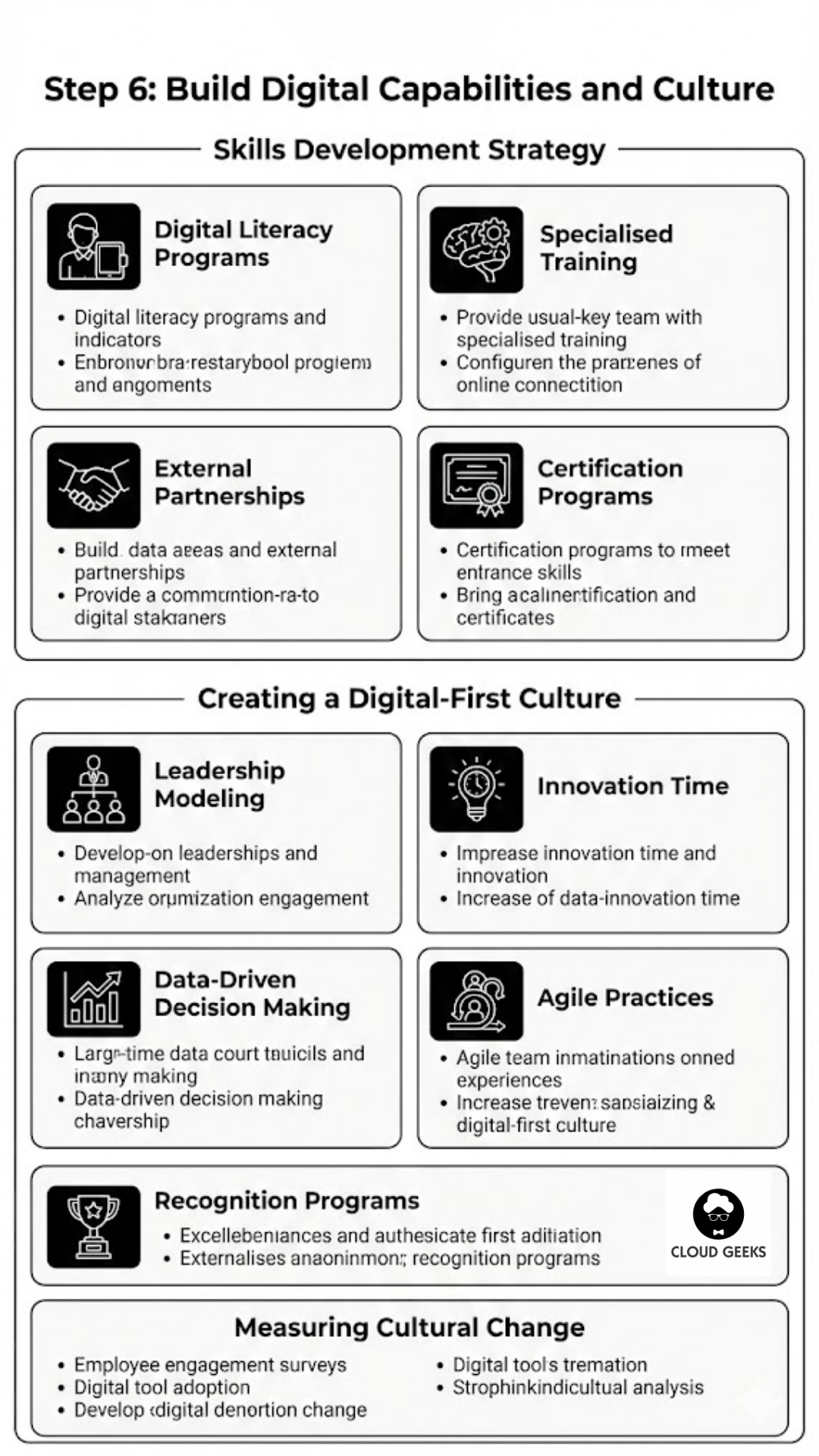
Technology alone doesn’t drive transformation—people do. Building digital capabilities and fostering a culture of innovation is essential for long-term success.
Skills Development Strategy
Digital Literacy Programs: Ensure all team members have foundational digital skills
Specialised Training: Invest in advanced training for key personnel in areas like data analytics, digital marketing, and cloud management
External Partnerships: Partner with Australian universities, TAFE institutes, or technology providers for ongoing education
Certification Programs: Support team members in obtaining relevant industry certifications
Creating a Digital-First Culture
Leadership Modeling: Leaders must demonstrate digital adoption and continuous learning
Innovation Time: Allocate time for experimentation and innovation projects
Data-Driven Decision Making: Encourage decisions based on data rather than intuition alone
Agile Practices: Use agile methodologies that promote flexibility and rapid iteration
Recognition Programs: Celebrate digital achievements and innovative thinking
Measuring Cultural Change
Track cultural transformation through:
- Employee engagement surveys
- Digital tool adoption rates
- Innovation project participation
- Skills assessment improvements
- Cross-functional collaboration metrics
Step 7: Measuring Success and Continuous Improvement
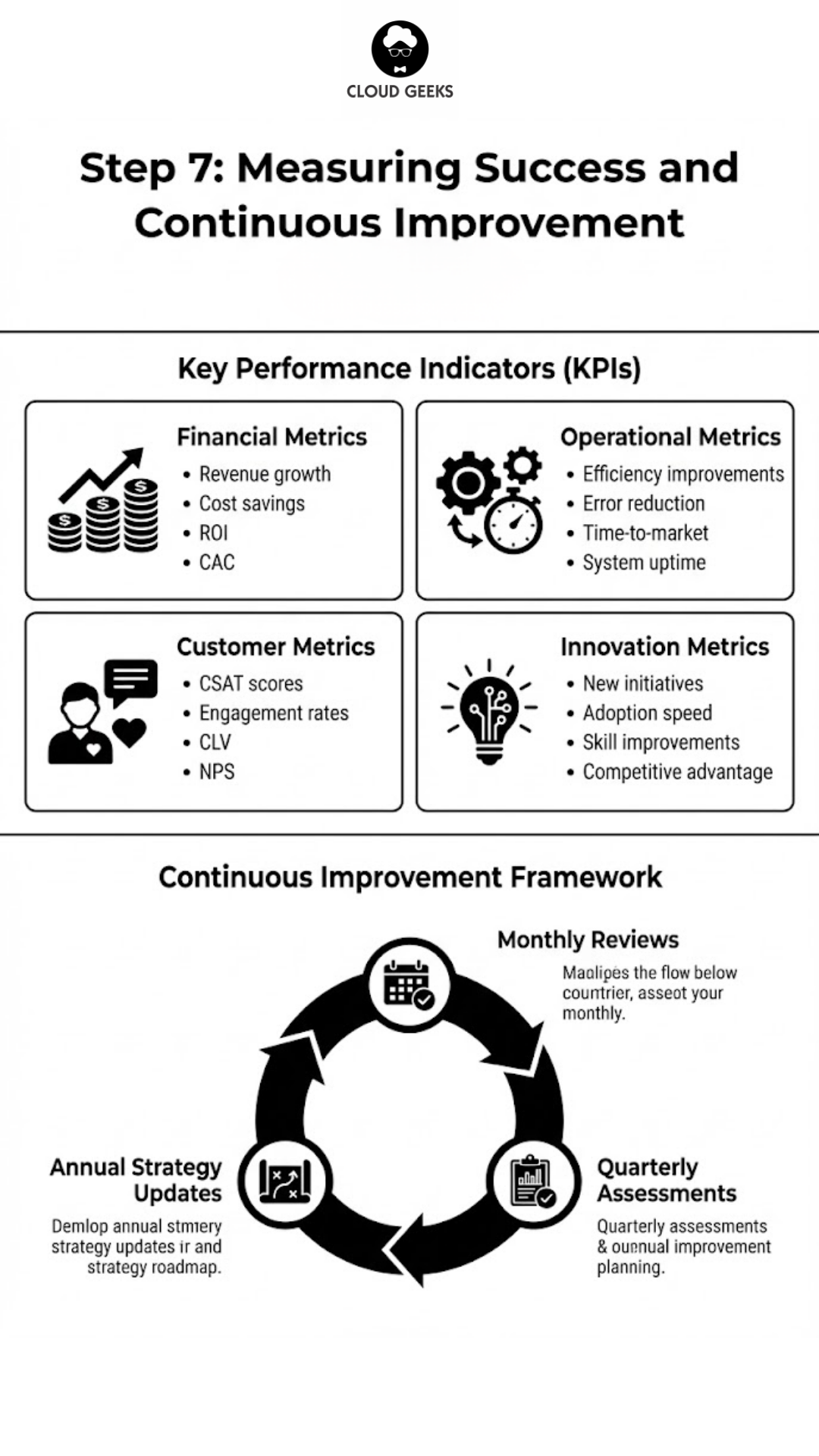
Digital transformation is an ongoing journey, not a destination. Establishing robust measurement systems ensures you stay on track and continue evolving.
Key Performance Indicators (KPIs)
Financial Metrics:
- Revenue growth from digital channels
- Cost savings from automation
- Return on digital investments
- Customer acquisition costs
Operational Metrics:
- Process efficiency improvements
- Error reduction rates
- Time-to-market for new products/services
- System uptime and reliability
Customer Metrics:
- Customer satisfaction scores
- Digital engagement rates
- Customer lifetime value
- Net Promoter Score improvements
Innovation Metrics:
- Number of new digital initiatives
- Speed of technology adoption
- Employee digital skill improvements
- Competitive advantage indicators
Continuous Improvement Framework
Monthly Reviews: Assess progress against short-term objectives and adjust tactics as needed
Quarterly Assessments: Evaluate overall program health and make strategic adjustments
Annual Strategy Updates: Reassess digital vision and long-term objectives based on market changes and business evolution
Staying Current with Technology Trends
The digital field evolves rapidly. Stay informed through:
- Industry publications and research reports
- Technology vendor roadmaps and updates
- Peer networks and industry associations
- Australian government digital transformation resources
- Technology conferences and webinars
Your Path Forward: Taking the First Step
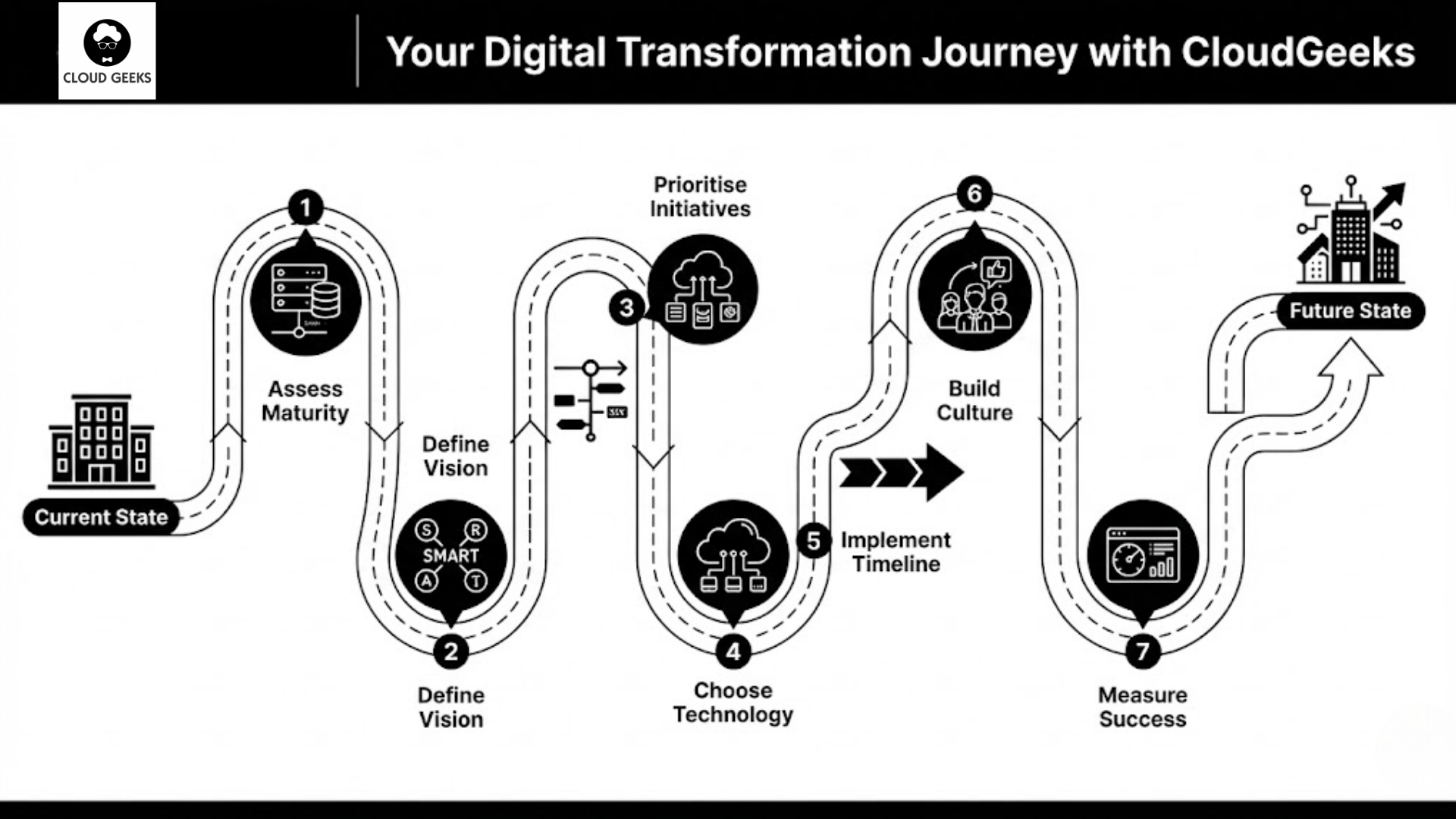
Digital transformation may seem daunting, but every successful journey begins with a single step. The businesses that thrive in Australia’s evolving economy will be those that embrace change, invest in their digital capabilities, and maintain a customer-centric focus throughout their transformation.
Immediate Action Items
- Conduct your digital maturity assessment using the framework outlined in Step 1
- Define 2-3 specific, measurable digital objectives that align with your business strategy
- Identify your first quick win project and allocate resources to use it within the next 90 days
- Assess your team’s digital skills and identify critical training needs
- Research technology solutions that address your highest-priority business challenges
Remember: Progress Over Perfection
Successful digital transformation isn’t about implementing every cutting-edge technology immediately. It’s about making steady, strategic progress that delivers measurable value to your business and customers. Start where you are, use what you have, and do what you can.
The Australian business field rewards organisations that adapt quickly and serve customers effectively. With the right roadmap, commitment, and support, your business can not only survive digital disruption but thrive in the digital economy.
Ready to start your digital transformation journey? Contact CloudGeeks to discuss your specific challenges and opportunities. Our team specializes in helping Australian SMBs navigate digital transformation with practical, tailored strategies that deliver measurable results.
Your digital transformation journey starts today. Take that first step, measure your progress, and keep moving forward. The future of your business depends on the digital decisions you make now.
Related Articles
- Cloud Migration ROI: Calculating Real Costs for Australian SMBs
- AI Tools for Australian SMBs: Practical Guide with Real Case Studies
- The Two-Speed Economy: Bridging the AI Gap for Established SMBs
- Azure vs AWS for Australian Businesses: Complete Comparison
- The True ROI of Cloud Migration: A Complete Guide for Australian Businesses
Extend your cloud services to mobile devices. Awesome Apps builds Flutter and React Native apps that integrate seamlessly with AWS, Azure, and GCP backends.
Cloud Geeks operates under the Ganda Tech Services umbrella, delivering end-to-end technology solutions for Australian businesses.