
Budget-Friendly AI Implementation: A Complete Guide for Australian SMBs in 2024
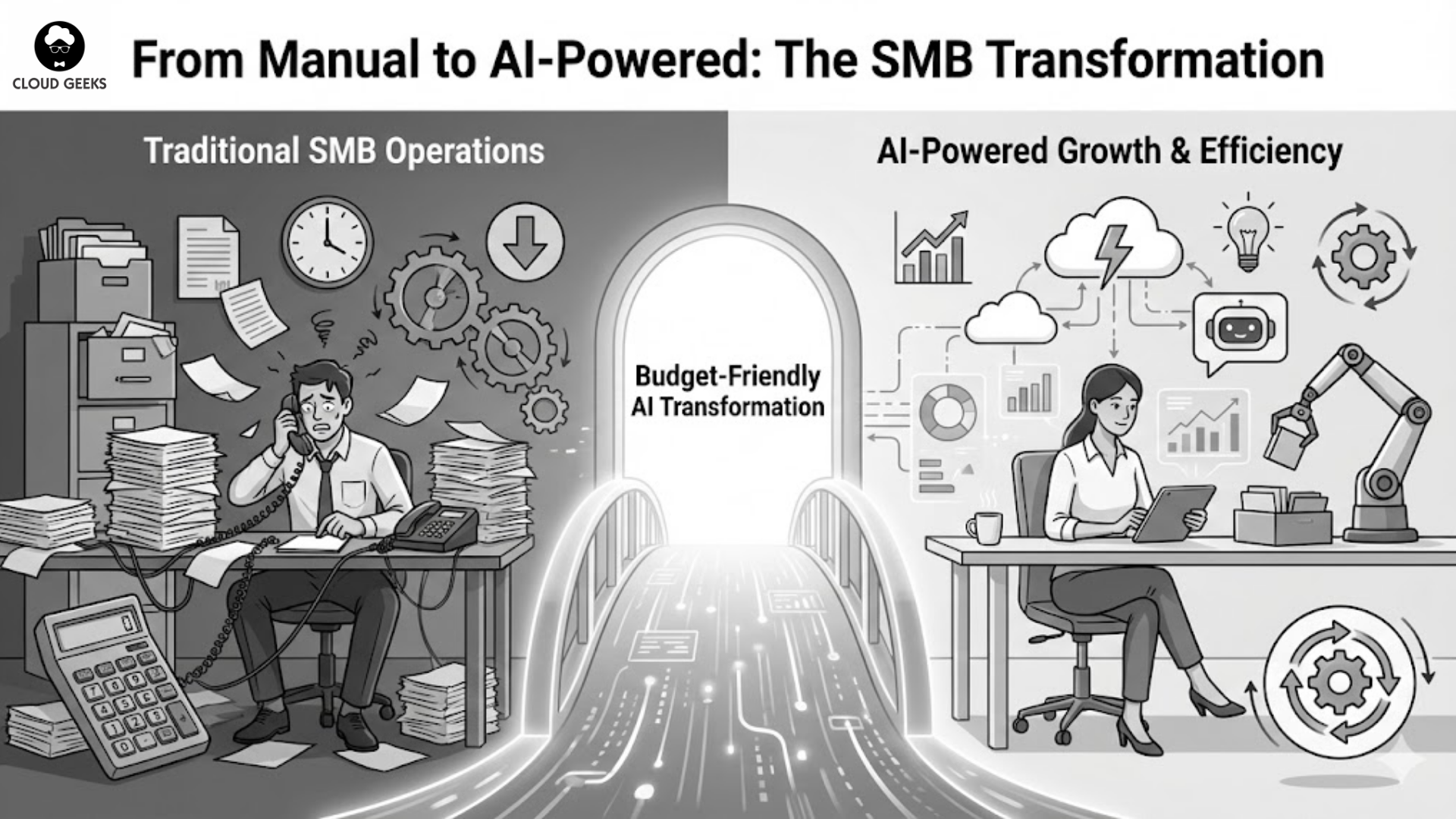
Artificial Intelligence isn’t just for tech giants and Fortune 500 companies anymore. In 2024, Australian small and medium businesses (SMBs) have unprecedented access to AI tools that can revolutionise operations, boost productivity, and drive growth—all without requiring a massive budget or technical expertise.
The AI revolution is democratising business intelligence, and forward-thinking Australian SMBs are already reaping the benefits. From Melbourne cafes using AI for inventory management to Brisbane accounting firms automating client communications, the possibilities are endless and surprisingly affordable.
In this comprehensive guide, we’ll explore practical, budget-conscious strategies that Australian SMBs can use today to harness the power of AI without breaking the bank.
At CloudGeeks, we help Australian businesses navigate the AI landscape with practical, affordable solutions. Our expertise in cloud-based AI implementation ensures SMBs can access enterprise-level capabilities at small business prices.
Start Small: Low-Cost AI Tools That Deliver Big Results
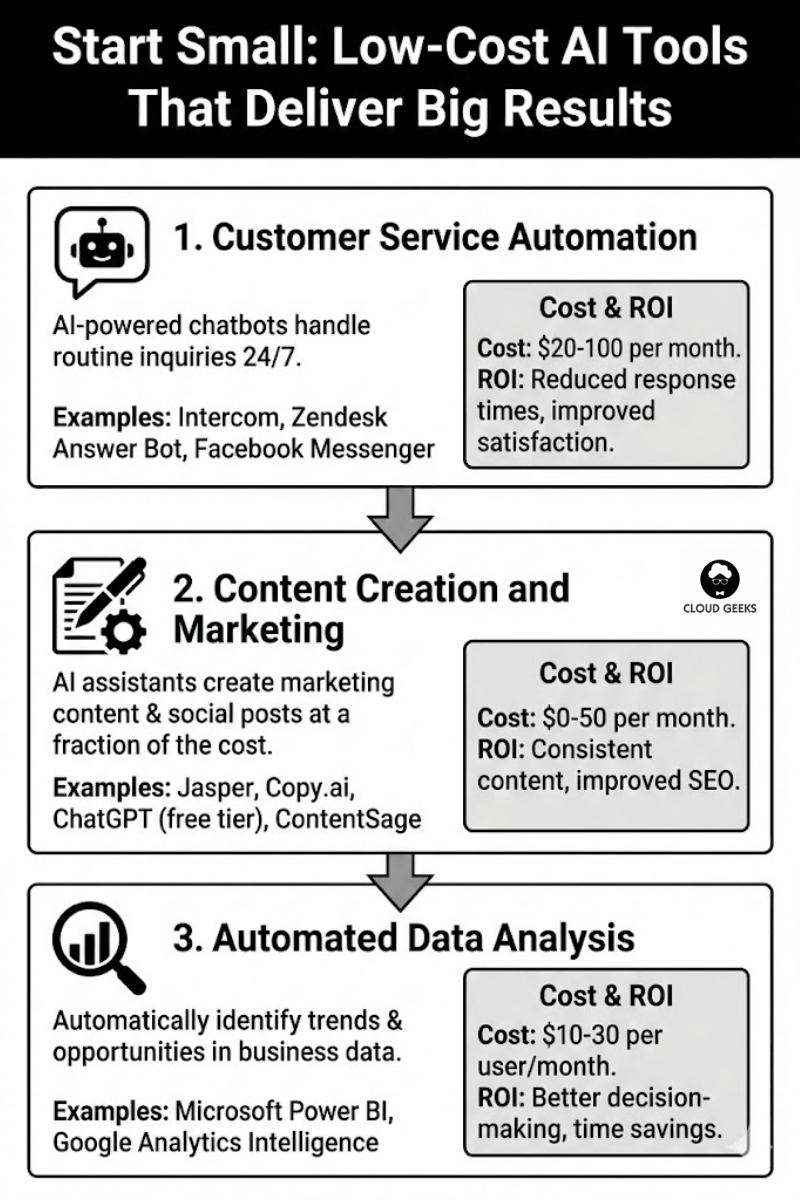
The key to successful AI adoption for SMBs lies in starting with low-risk, high-impact applications. Rather than attempting to overhaul your entire business overnight, focus on specific pain points where AI can provide immediate value.
Customer Service Automation
Implementing AI-powered chatbots is one of the most accessible entry points for Australian SMBs. Tools like Intercom, Zendesk Answer Bot, or even Facebook Messenger’s automated responses can handle routine customer inquiries 24/7.
Cost: $20-100 per month ROI: Reduced response times, improved customer satisfaction, freed up staff for complex tasks
A Sydney-based plumbing service recently implemented a simple chatbot that handles appointment bookings and frequently asked questions. The result? A 40% reduction in phone calls and improved customer satisfaction scores, all for less than $50 monthly.
Content Creation and Marketing
AI writing assistants like Jasper, Copy.ai, or the free tier of ChatGPT can help SMBs create marketing content, product descriptions, and social media posts at a fraction of traditional costs.
For Australian businesses looking to scale their content marketing, ContentSage provides an AI-powered SEO writing platform that creates ranking content while maintaining your brand voice and quality standards.
Cost: $0-50 per month ROI: Consistent content creation, improved SEO, reduced marketing agency costs
Automated Data Analysis
Tools like Microsoft Power BI with AI insights or Google Analytics Intelligence can automatically identify trends, anomalies, and opportunities in your business data without requiring a data science degree.
Cost: $10-30 per user per month ROI: Better decision-making, identified revenue opportunities, reduced analysis time
Cloud-Based AI: Your Gateway to Enterprise-Level Intelligence
Cloud platforms have made sophisticated AI capabilities accessible to businesses of all sizes. Australian SMBs can now access the same AI technologies used by large corporations through pay-as-you-go models.
Amazon Web Services (AWS) AI Services
AWS offers a comprehensive suite of AI services that require no machine learning expertise:
- Amazon Rekognition: Image and video analysis (great for retail inventory management)
- Amazon Comprehend: Text analysis and sentiment monitoring
- Amazon Polly: Text-to-speech for creating audio content
- Amazon Lex: Build conversational interfaces
Pricing Model: Pay only for what you use, often starting from cents per transaction
Google Cloud AI Platform
Google’s AI services excel in areas like:
- Vision API: Product recognition and quality control
- Natural Language API: Customer feedback analysis
- Translation API: Multilingual customer support
- AutoML: Create custom AI models without coding
Microsoft Azure Cognitive Services
Azure offers user-friendly AI services including:
- Form Recognizer: Automate data extraction from documents
- Speech Services: Voice-to-text transcription
- Personalizer: Customise user experiences
A Perth-based logistics company used Azure’s Form Recognizer to automate invoice processing, reducing manual data entry by 80% and saving 15 hours per week.
Industry-Specific AI Applications for Australian SMBs
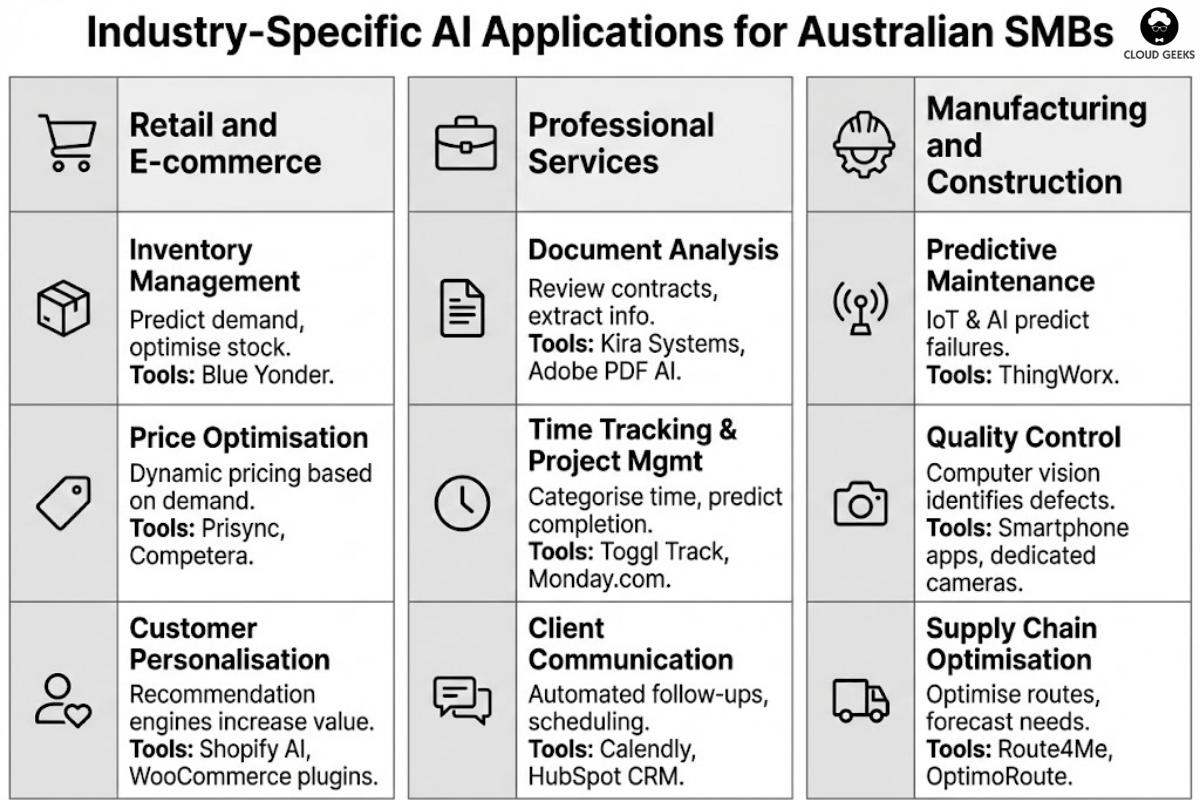
Different industries can leverage AI in unique ways, and understanding sector-specific applications helps maximise ROI while minimising costs.
Retail and E-commerce
Inventory Management: AI algorithms can predict demand patterns, optimising stock levels and reducing waste. Tools like Blue Yonder or even Excel with AI features can provide sophisticated forecasting.
Price Optimisation: Dynamic pricing tools adjust prices based on demand, competition, and inventory levels. Prisync and Competera offer affordable solutions starting from $50/month.
Customer Personalisation: Recommendation engines increase average order value. Shopify’s built-in AI features or WooCommerce plugins provide this functionality without custom development.
Professional Services
Document Analysis: Legal firms and consultancies can use AI to review contracts, extract key information, and identify risks. Tools like Kira Systems or even Adobe’s PDF AI features streamline document workflows.
Time Tracking and Project Management: AI-powered tools like Toggl Track or Monday.com automatically categorise time entries and predict project completion dates.
Client Communication: Automated follow-ups, appointment scheduling, and proposal generation can be handled by tools like Calendly with AI features or HubSpot’s free CRM.
Manufacturing and Construction
Predictive Maintenance: IoT sensors combined with AI analysis can predict equipment failures before they occur. Platforms like ThingWorx or even simple solutions using Google Sheets with AI functions provide early warning systems.
Quality Control: Computer vision can identify defects in products or construction work. Solutions range from smartphone apps using AI to dedicated cameras with built-in analysis.
Supply Chain Optimisation: AI helps optimise delivery routes, manage supplier relationships, and forecast material needs. Tools like Route4Me or OptimoRoute offer affordable logistics AI.
Implementation Strategies: From Pilot to Scale
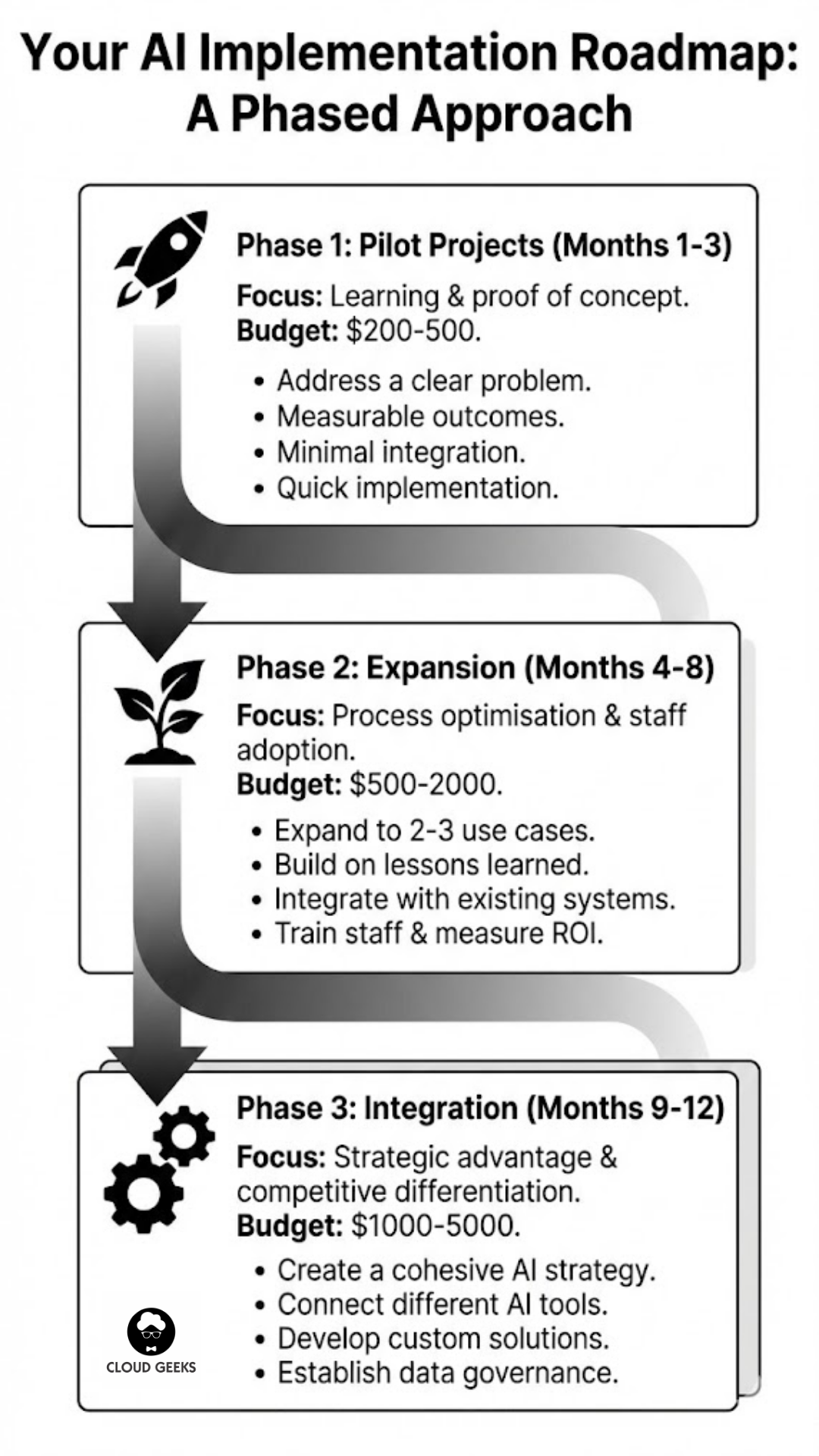
Successful AI implementation requires a structured approach that minimises risk while maximising learning and ROI.
Phase 1: Pilot Projects (Months 1-3)
Start with one specific use case that:
- Addresses a clear business problem
- Has measurable outcomes
- Requires minimal integration
- Can be implemented quickly
Budget allocation: $200-500 for initial tools and setup Focus: Learning and proof of concept
Phase 2: Expansion (Months 4-8)
Based on pilot results, expand to 2-3 additional use cases:
- Build on lessons learned
- Integrate AI tools with existing systems
- Train staff on new processes
- Measure ROI and adjust strategies
Budget allocation: $500-2000 for expanded toolset and training Focus: Process optimisation and staff adoption
Phase 3: Integration (Months 9-12)
Create a cohesive AI strategy:
- Connect different AI tools for compound benefits
- Develop custom solutions for unique needs
- Establish data governance practices
- Plan for advanced AI capabilities
Budget allocation: $1000-5000 for advanced tools and potential custom development Focus: Strategic advantage and competitive differentiation
Building Internal AI Capabilities
Staff Training: Invest in upskilling your team through online courses, webinars, and workshops. Platforms like Coursera, LinkedIn Learning, and local TAFE institutions offer AI literacy programs.
Data Preparation: AI is only as good as your data. Use basic data hygiene practices:
- Standardise data formats
- Remove duplicates and errors
- Establish regular backup procedures
- Document data sources and meanings
Performance Monitoring: Establish KPIs for AI initiatives:
- Time savings
- Cost reductions
- Accuracy improvements
- Customer satisfaction increases
Overcoming Common Challenges and Pitfalls
While AI implementation offers tremendous opportunities, Australian SMBs often face specific challenges that can derail initiatives if not properly addressed.
Data Privacy and Compliance
Australia’s Privacy Act 1988 and the upcoming Consumer Data Right legislation require careful consideration of how AI tools handle customer data.
Best Practices:
- Choose AI vendors with Australian data centres
- Understand data residency requirements
- Use consent management processes
- Regular privacy impact assessments
Recommended Tools: OneTrust for privacy management, TrustArc for compliance monitoring
Skills Gap and Change Management
Many SMBs worry about staff resistance to AI adoption or lack of technical skills.
Solutions:
- Frame AI as augmentation, not replacement
- Involve staff in tool selection processes
- Provide comprehensive training and support
- Celebrate early wins and success stories
Change Management Budget: Allocate 20-30% of your AI budget to training and change management
Integration Complexity
Connecting AI tools with existing systems can seem daunting for SMBs without dedicated IT teams.
Strategies:
- Prioritise AI tools with pre-built integrations
- Use no-code platforms like Zapier or Microsoft Power Automate
- Consider cloud-based solutions that integrate easily
- Partner with local IT consultants for complex integrations
ROI Measurement Challenges
Quantifying AI benefits can be difficult, especially for indirect improvements like customer satisfaction.
Measurement Framework:
- Establish baseline metrics before implementation
- Track both quantitative and qualitative improvements
- Consider long-term benefits like customer retention
- Regular review and adjustment of success metrics
Conclusion: Your AI Journey Starts Now
The AI revolution is not a distant future—it’s happening now, and Australian SMBs that act quickly will gain a significant competitive advantage. The key to success lies not in implementing the most advanced AI technology, but in starting with practical, affordable solutions that address real business needs.
Remember these essential takeaways:
- Start Small: Begin with low-risk, high-impact applications that provide immediate value
- Leverage the Cloud: Cloud-based AI services offer enterprise capabilities at SMB prices
- Focus on Your Industry: Sector-specific applications often provide the highest ROI
- Plan for Scale: Use AI incrementally, building capabilities over time
- Invest in People: Success depends as much on change management as technology
The businesses that thrive in the AI era won’t necessarily be those with the biggest budgets, but those that embrace change, experiment intelligently, and focus on delivering value to their customers.
Your AI journey doesn’t require a massive investment—it requires commitment, curiosity, and a willingness to learn. Start today with one small pilot project, measure the results, and build from there. The future of your business may depend on the AI decisions you make today.
Ready to begin your AI transformation? Contact the CloudGeeks team for personalised advice on implementing AI solutions that fit your budget and business goals. We specialise in helping Australian SMBs navigate the AI landscape with practical, cost-effective strategies that deliver real results.
Related Articles
- AI Tools for Australian SMBs: Practical Guide with Real Case Studies
- AI on a Budget: How Australian SMBs Can Harness Artificial Intelligence
- Cloud Migration ROI: Calculating Real Costs for Australian SMBs
- Digital Transformation Roadmap: A 7-Step Guide for Australian SMBs
- Beyond Design: How Australian SMBs Are Using Canva’s AI for Operations
Looking for a website that matches your enterprise-grade infrastructure? Cosmos Web Tech specialises in responsive web design and SEO for Australian businesses.
Ganda Tech Services brings together cloud infrastructure, web development, and mobile app expertise to help Australian businesses thrive in the digital economy.