
wp2shell: Why Free Wordfence Users Wait Until 16 August for Protection
On 17 July 2026 the WordPress Security Team patched wp2shell, a critical unauthenticated remote code execution chain in WordPress core. Wordfence describes it as the first vulnerability of its kind in nearly a decade.
The part that matters for a small business is not the CVE. It is this:
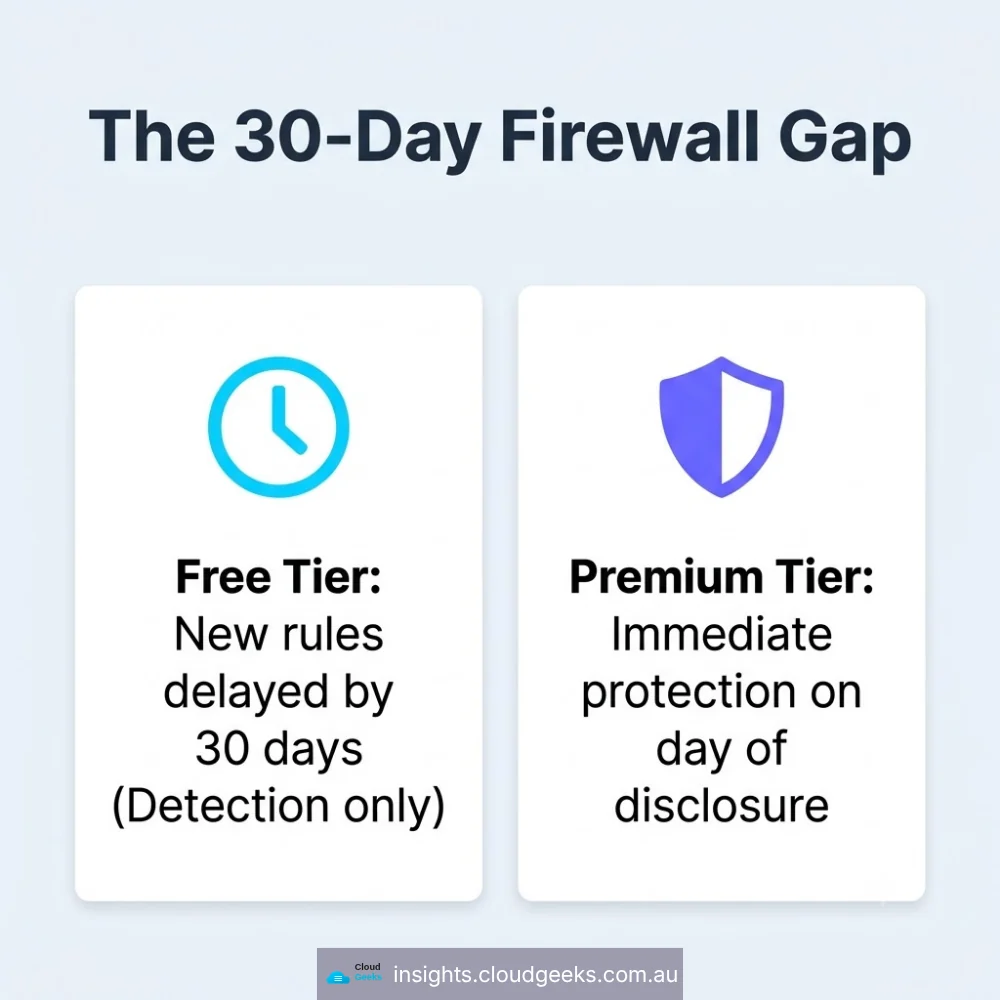
Wordfence Premium, Care and Response customers were protected on 17 July 2026, the day of disclosure. Free users receive the same protection on 16 August 2026.
That is a thirty-day window, on an actively exploited core vulnerability with public proof-of-concept code. If you are reading this on the day it was published, sixteen of those days are left.
This post is about what to do with those sixteen days. We are a Wordfence affiliate and we will say plainly where that shapes our advice — but the honest answer here is mostly free, and mostly not a purchase.
What wp2shell actually is
The three facts that decide whether you should care:
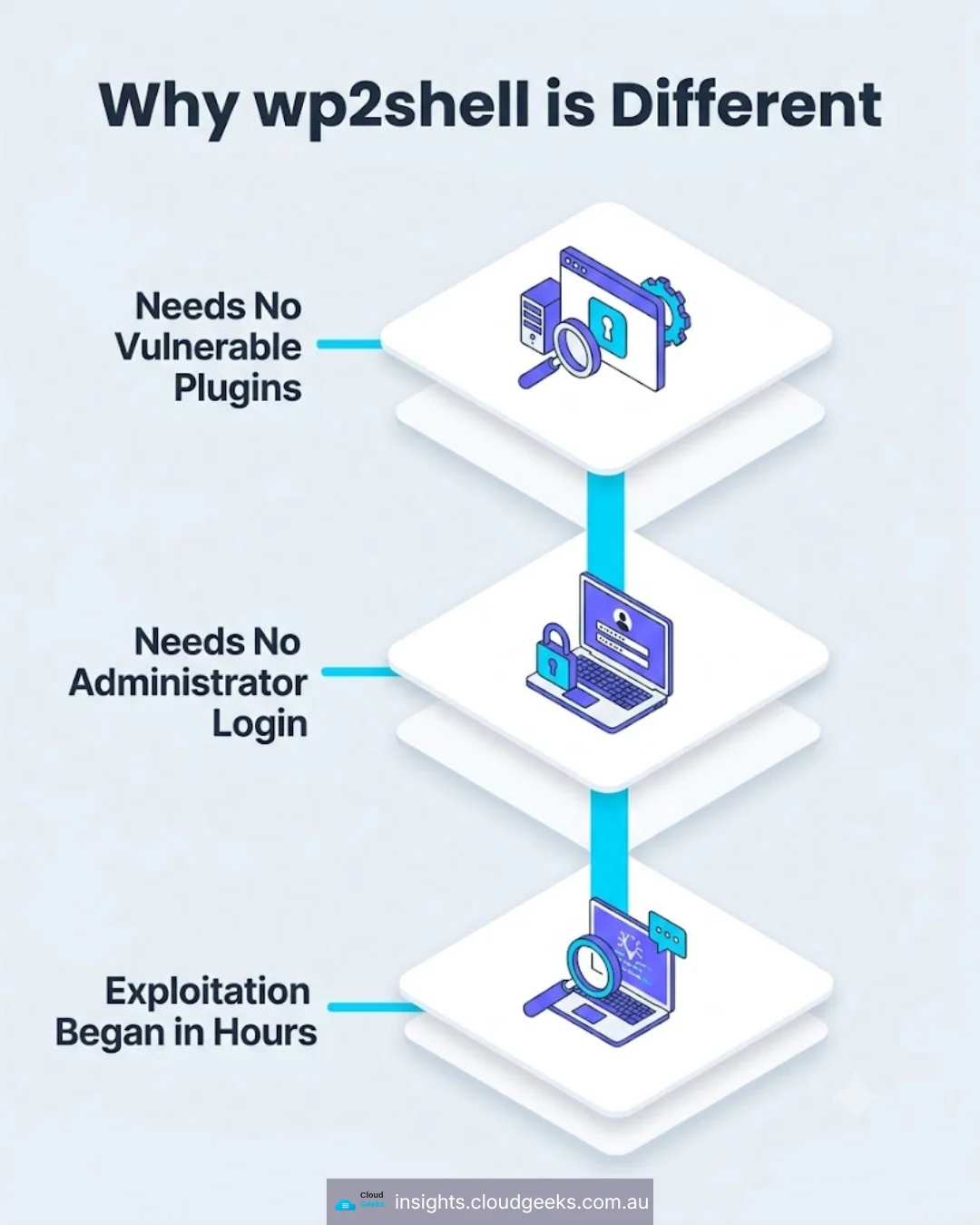
It needs nothing from you. Exploitation requires no vulnerable plugin, no vulnerable theme, and no login. A vulnerable, internet-facing WordPress site is sufficient. Most WordPress incidents we clean up start with a plugin nobody updated. This one does not.
The patch is version-specific. Patched releases are 6.8.6, 6.9.5 and 7.0.2. The 6.9.x and 7.0.x branches are affected by the full remote code execution chain. The 6.8.x branch is affected only by the SQL injection component — still serious, but not the same class of problem.
Exploitation started within hours of the patch. Not days. Public proof-of-concept code followed. This is the ordinary rhythm of a core disclosure: the patch itself tells attackers where to look, and diffing it is not hard.
Worth being precise about a word you will see misused on this one: wp2shell was not a zero-day. A zero-day is exploited before a fix exists. Here the fix came first, on 17 July, and exploitation followed it. That distinction matters, because it means patching was available from day one — which is exactly why the advice below starts where it does.
Why the free tier waits thirty days
This is a deliberate, published part of how Wordfence funds itself. New firewall rules go to paying customers immediately and to the free tier after thirty days. It is not a bug or a lapse, and Wordfence is unusually open about it.
It is worth understanding what it does and does not mean.
It does not mean free Wordfence is useless. The scanner, the login protections and the existing rule set all keep working. What is delayed is the new rule for this vulnerability.
It does mean the free tier is a detection tool more than a prevention tool during a live event. For thirty days after a disclosure, free Wordfence will often tell you that something happened rather than stop it happening.
For most of the year that distinction is academic. During an actively exploited unauthenticated core RCE, it is the whole thing.
The sixteen days: what actually closes the gap
In order of how much risk each removes.
1. Update WordPress. This ends the exposure entirely.
The firewall rule is a mitigation. The patch is a fix. If your site is on 6.8.6, 6.9.5 or 7.0.2, wp2shell is not your problem any more and nothing else in this list matters.
Confirm the update actually completed rather than assuming it did. A failed auto-update that reports success is common enough that we check it by hand on every site we manage.
2. Check for what may already have happened
Exploitation began before most sites were patched, so a clean site today is not evidence of a clean site last week. Look for:
- Administrator accounts you do not recognise, especially created since 17 July
- Plugin or theme files modified recently without a corresponding update
- Scheduled tasks (WP-Cron entries) you did not create
- Unexpected outbound requests in your server logs
Wordfence’s file-change detection does this well and is available on the free tier. This is exactly the job the free version is good at.
3. Only then consider paying for the rule
If you cannot update immediately — a client site with a fragile theme, a plugin that breaks on 7.0.x, a change freeze — then the thirty-day gap is a genuine problem and a paid tier closes it today.
That is the honest case for buying, and it is narrower than most affiliate content will tell you. If you can update, update. Buying a firewall rule to protect against something the patch already fixes is spending money to avoid a ten-minute job.
The wider number nobody plans for
wp2shell is one entry in a much larger stream. From Wordfence’s weekly vulnerability reports across six consecutive weeks:
| Week | Vulnerabilities disclosed |
|---|---|
| 15–21 June 2026 | 146 |
| 22–28 June 2026 | 199 |
| 29 June – 5 July 2026 | 246 |
| 6–12 July 2026 | 267 |
| 13–19 July 2026 | 75 |
| 20–26 July 2026 | 223 |
| Six-week total | 1,156 |
That is roughly 193 disclosures a week in the WordPress ecosystem, sustained.
No small business owner is going to read those reports. Nobody should expect them to. But the number reframes the question from “did I hear about this one?” to “what is my process for the ones I will never hear about?” — and that is a question with a real answer:
- Automatic updates on for minor core releases, at minimum
- A monthly window to apply major updates deliberately, with a rollback path
- File-change detection running, so you find out from your own tooling rather than from a customer
- A known-good backup you have actually restored from at least once
None of that is exciting and all of it is cheaper than a cleanup.
Where we stand
We run Wordfence, MalCare and Sucuri across sites we manage, and we hold affiliate relationships with all three. Two things follow from that, and you should weigh both.
We see the real alert traffic, which is why this post exists at all — the thirty-day gap is not a secret, but it is buried in a product page rather than stated as the operational fact it is.
We also get paid if you buy. So the test we apply to our own advice is whether we would give it to a client who was not buying anything. Here we would: update WordPress, check for compromise, and only buy the paid tier if you genuinely cannot patch. That advice costs us money and it is still the right advice.
If you would rather not think about any of this, that is what a managed service is for — we patch, we watch the alert stream, and you find out about wp2shell from a monthly summary instead of a blog post.
Sources. Wordfence Threat Intelligence advisory wp2shell Aftermath: The First Critical Unauthenticated WordPress Core RCE in Nearly a Decade, 20 July 2026, and Wordfence Intelligence Weekly Vulnerability Reports for the weeks ending 21 June through 26 July 2026. Version numbers, protection dates and disclosure counts are quoted from those advisories as received. Verify current patch status against WordPress.org before acting — this post is dated 31 July 2026 and vulnerability information ages quickly.
Disclosure: Cloud Geeks holds affiliate relationships with Wordfence, MalCare and Sucuri. We may earn a commission if you purchase through our links. It does not change what we run on our own sites.